
SIA New Member Profile: Envoy
New Security Industry Association (SIA) member Envoy brings visitor management, emergency management, digital signage, mailroom management, space planning and resource booking into one integrated platform. The company is headquartered in San Francisco, California, and serves global enterprise across various environments, including regions in North America; Europe, the Middle East and Africa (EMEA) and Asia.
SIA spoke with Bridget Scott Akinc, vice president of strategy and enablement at Envoy, about the company, the security industry and working with SIA.
Tell us the story of your company.

Bridgett Scott Akinc: Envoy was founded by Larry Gadea in 2013. During his time working at both Google and Twitter, Gadea developed the operational and access systems that powered the office spaces. In addition to workplace and deliveries, he built a digital visitors sign in product that worked well in multiple different facilities.
Recently, with heightened concerns for third and fourth parties entering both the physical spaces and digital networks for operating companies, Envoy made the transition into broader physical security to address the convergence between physical and digital perimeters. Envoy’s mission evolved into protecting the people and places the world relies on most, with concerted focus on working well with heterogeneous access control systems, Wi-Fi provisioning and single sign-on (SSO) in existing tech stacks at our clients. We deliver a cloud-native software-as-a-service platform that integrates physical visitor operations, presence data and emergency readiness into broader enterprise security and cyber strategies, centered on knowing who is in your spaces at all times.


What solutions/services does your business offer in the security industry? And what makes your offerings/company unique?
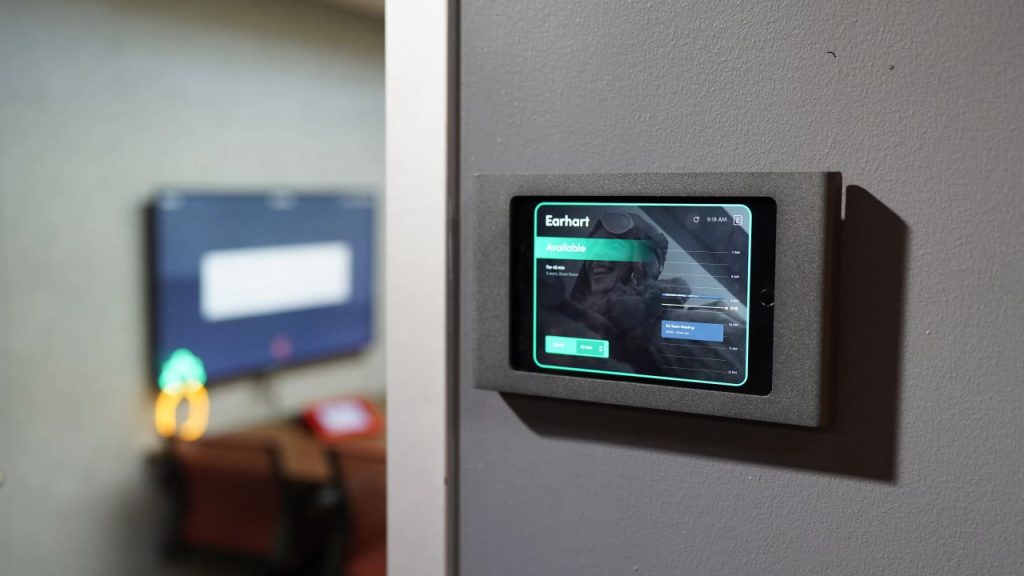
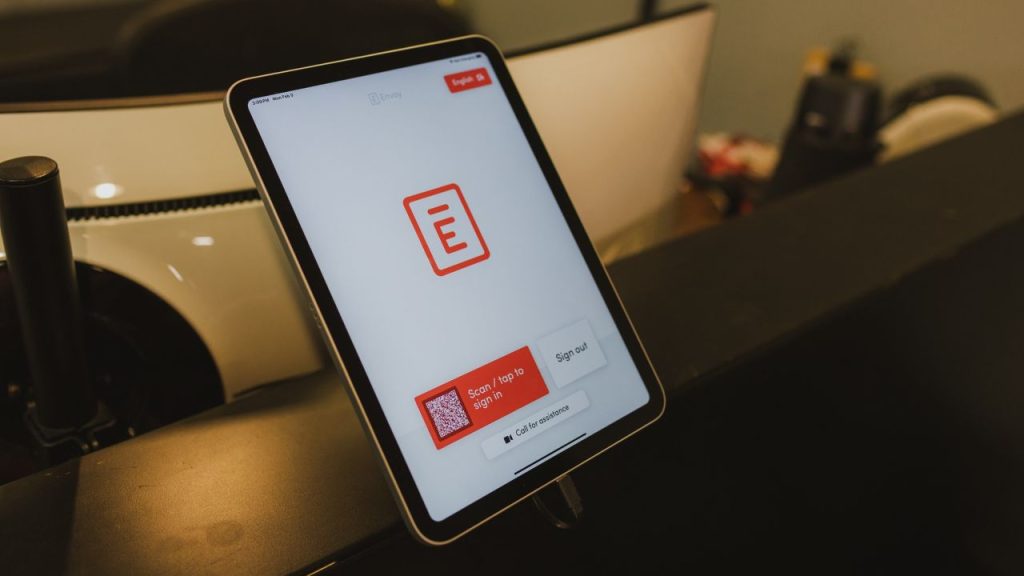
BSA: Envoy offers cloud-native visitor management, workplace access control integration, emergency notification system and threat intelligence, as well as presence analytics used to provide key security access information and operational savings, while producing auditable records. Our platform connects with over 20 access control partners and unifies disparate badge systems into a single platform. Our system also integrates to all the major SSO and Wi-Fi provisioning systems for control of the network and digital access. This provides real-time presence across all populations—employees, contractors, customers and delivery drivers—something that no other platform can do. With this data, security teams are supported with predictive analytics, context-aware access and automated audit trails to meet strict compliance standards.


What is something we might not know about your company—or something new you are doing in security?
BSA: Most people recognize Envoy for visitor check-in in the lobby. What they may not know is that Envoy now runs as a tool in the security operations center (SOC)—offering a platform integrated to the Wi-Fi, SSO and access control systems to provide multi-signal presence analytics to enable proactive security operations.
Envoy’s newer work is all about closing gaps. Every person who enters a space—employee, contractor, visitor, vendor or delivery driver—resolves to one verified identity record, with history that follows them across visits and sites. We’ve brought identity verification onto the platform itself, so a government ID can be scanned, matched to the live person standing at the desk and checked against watchlists and denied-party lists before entry, not after. We integrate with access control, Wi-Fi provisioning and single sign-on systems, so the SOC or command center has a full view of who’s on-site and what they can access—not just who badged in. And we’re building toward verification that persists, so a person verified once carries that authorization into future visits until the time frame designated by the organization – at every site, under every framework their host organization answers to.
The goal is one record everyone can trust, instead of five systems that each hold part of the answer.


What does SIA offer that is most important to you/your company? And what do you most hope to get out of your membership with SIA?
BSA: First, the member communities and the audience. We’ve been part of ISC West for years, and this March we hosted a women in security breakfast there, which filled every seat, alongside a customer panel on the Bridge stage. That tells us there’s appetite for the conversation we want to have, which is what changes when visitor and contractor identity gets treated as a security control rather than a front desk task. What we hope to get from membership is a two-way exchange: learning from integrators and manufacturers who have been solving physical security problems for decades and contributing our research and point of view on identity, presence and compliance evidence back to the group. We published new research this year on the gap between how protected organizations feel and what they can actually prove, and that’s the kind of thing we’d like to bring to SIA’s education and thought leadership programs.
Second, SIA’s research on standards and access to the people setting the standards. Envoy sits at the point where physical access, identity and cybersecurity meet, and that intersection has very little shared language right now. Every access control system, credentialing approach and screening requirement works a little differently, which makes life harder for the security teams trying to run consistent policy across 20 sites. SIA’s standards work and its advocacy on federal policy give us a place to contribute to that alignment instead of building around it. The research and market data are equally useful. We publish our own research on physical security and compliance, and having SIA’s industry view alongside it helps us pressure-test what we’re seeing in the field.
What is your company’s vision, and what are your goals for the security industry?
BSA: Envoy’s goal within the security space is to unify physical access control and cybersecurity functions seamlessly under zero-trust principles, being able to provide real-time auditability and context-aware intelligence across every physical entry point.


What do you think are the biggest opportunities in the security industry right now?
BSA: Identity is the biggest one. Cybersecurity teams have spent a decade maturing identity: single sign-on, least privilege, continuous verification, deprovisioning that happens on time. Physical security has largely stayed on badges and lists, which assume the person holding the credential is the person it was issued to. Our new research The State of Physical Security & Compliance found that 71–72% of organizations give contractors no single identity that follows them from one location to the next, and no industry we studied clears even one in three. Health care sits at 22%, manufacturing at 26%. That gap is not theoretical. 79% of leaders reported at least one unauthorized access incident in the past year. Third- and fourth-party access, unescorted vendors, an offboarded employee whose badge still opens a door: those are identity problems, and they’re solvable.
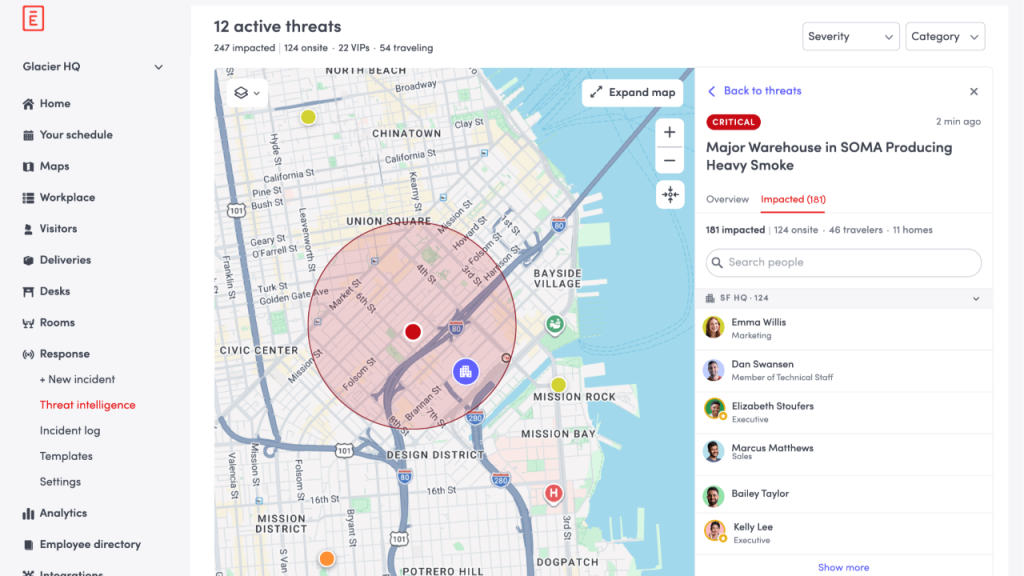
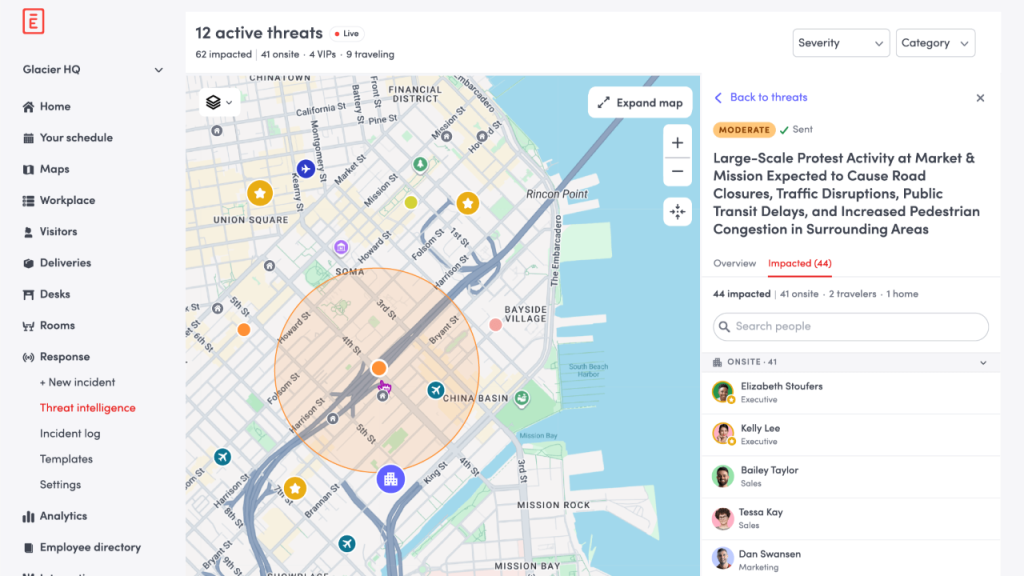
The second is having accurate accounting of people’s presence in a facility—knowing who is in a facility at all times. In our research report mentioned earlier, 44% of leaders at high-security workplaces told us they can’t confidently say who was in their building yesterday, yet 62% are very confident they’d pass a compliance audit today with zero preparation. Audit confidence sits at 71% for single-site organizations and drops to 58% as soon as a second site is added, which is the exact point where identity stops following a person between buildings. The opportunity is to turn the signals every building already runs, from access control to Wi-Fi to HR systems, into one authoritative answer to who is here right now. Once you have that, emergency communication reaches everyone on site instead of only the staff directory, and compliance becomes evidence generated as people come and go rather than paperwork assembled after the fact. That matters more every quarter as frameworks like the Cybersecurity Maturity Model Certification (CMMC) and International Traffic in Arms Regulations (ITAR) tighten. The companies that unify physical and digital under one identity and one presence record will set the direction for this industry.

What are your predictions for the security industry in the short and long term?
BSA: In the short term, expect consolidation. Physical security budgets are moving, with the chief information security officer holding an increasingly important role when cloud-based, artificial intelligence-powered solutions are solving security challenges. Teams that used to purchase a visitor system, an access control system and a mass notification tool separately are now asking how those systems share one identity and one set of audit records. Regulation is accelerating it. CMMC enforcement in defense contracts, ITAR obligations and tightening data protection rules in EMEA are pushing organizations to produce evidence on demand rather than assemble it after an audit request. Within the next 18 months, identity verification at the door goes from a differentiator to an expectation, and any emergency notification system that only reaches the staff directory will be treated as incomplete, because contractors and visitors are on site too.
Long-term, presence analytics will become an infrastructure layer the same way identity did for cybersecurity. Zero-trust principles will apply to physical entry, which means continuous verification instead of a single badge check at the perimeter, and access decisions that account for who a person is, what they’ve been approved for and where they are right now. Verified credentials will become portable, so a contractor verified once carries that identity across sites and across the organizations they work with, rather than starting over at every lobby. Physical access events will land in the SOC alongside network events. And agentic systems will handle the routine work of approvals, screening and incident triage, with people focused on judgment calls and exceptions. The organizations that get there first will spend far less time proving they’re secure, because the proof is a byproduct of how their buildings run.
What are the biggest challenges facing your company and/or others in the security industry?
BSA: Our customers frequently face a critical disconnect between their IT and cybersecurity leaders and their physical facilities management teams. Many organizations have brought a digital solution for visitor management on board, without integrating to the badge provisioning, Wi-Fi access and SSO applications. These integrations can save security teams time, but more importantly provide more accurate real-time information about a visitor, contractor or employee’s presence in the facility. In addition, many organizations are relying on basic mass-notification tools that are tied exclusively to staff directories, which overlooks the contractors, visitors and customers who are actually present on-site. Solving these challenges is critical because treating physical and digital perimeters as separate entities leaves an organization highly vulnerable to safety events, cyber-physical threats and regulatory exposure. A bad actor can easily leverage a physical vulnerability, which can gain them lateral access to sensitive digital assets or proprietary intellectual property. Relying strictly on staff directories for emergency communications creates a dangerous blind spot in a crisis. During a physical threat, natural disaster, or building lockdown, security teams are forced into a manual scramble to account for anyone not on the payroll. We’re helping solve this by providing a real-time view of everyone physically present in the building, ensuring that authoritative, actionable alerts reach every person on site instantly and leave an audit trail for regulators and insurers.

What do you enjoy most about being at your company—and in the security industry?
BSA: What I enjoy most about being at Envoy is the opportunity to make an incredibly difficult job a little easier. Security professionals carry enormous responsibility. They’re protecting people, facilities, intellectual property and operations, often across hundreds of locations and populations that are constantly changing. And when something goes wrong, they cannot rely on incomplete information or disconnected systems.
That’s why I’m so passionate about identity and presence. We’ve seen this firsthand with complex organizations, where security has to work across a large, complex operation with employees, contractors, drivers and visitors constantly moving through facilities. The goal shouldn’t be to give security professionals another system to monitor. It should be to help them answer the questions that matter: who is this person, should they be here, where are they now, and if something happens can I reach and account for them?
That last piece is especially important to me. I think we’ve democratized safety at Envoy. Emergency preparedness can’t be relegated to the C-suite or even with the employees alone. The contractor on the floor, the customer on site, the driver making a delivery and the visitor attending an event all deserve to be accounted for if an unlikely emergency event occurs. Presence analytics and emergency response gives security teams the ability to extend that threat intelligence protection and communication tool to everyone.
What I enjoy about this industry is that the people in it are extraordinarily mission-driven. They already know what they’re trying to accomplish: keep people safe. Our responsibility as a technology company is to make that mission easier to execute—to connect the information they already have, reduce the manual work and noise, and give them the context they need to make good decisions quickly. The technology should carry a greater return on investment by integrating across the systems, so security professionals can focus on the judgment, expertise and human decisions that only they can make.

How does your organization engage with SIA? What are your plans for involvement in the next year?
BSA: Executive events, research and thought leadership are all of keen interest to us.
The views and opinions expressed in guest posts and/or profiles are those of the authors or sources and do not necessarily reflect the official policy or position of the Security Industry Association.
 Back to Top