
Big Failures Start Small
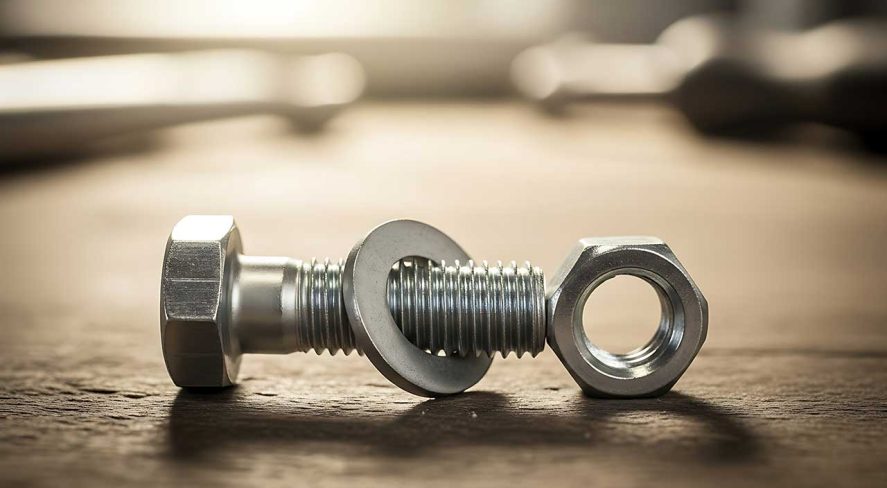
Something as simple as a bolt can cause a costly cascade

Security systems rarely fail all at once. Instead, they fail one small part at a time. Then the individual pieces take each other down.
In the engineering world, this is called cascading failure. One component makes others weak. The load from one failed part shifts to what is next to it, which was not designed to carry that load, so it fails, too. The chain keeps going until the whole system is down.
One classic example is the 2003 Northeast blackout. It started with a single generating plant tripping offline in Ohio. The load redistributed to neighboring lines, which overloaded and failed in sequence. Fifty million people lost power. The estimated damage was around $6 billion. The trigger was tiny. The outcome definitely was not.
The security industry knows this pattern. We just don’t always call it by its name.
Three cascades, one lesson
In January 2024, a door plug blew out of a Boeing 737-9 at 14,830 feet. The NTSB’s final report found the cause: Four bolts were removed during factory rework and never reinstalled. No removal record was created, so no inspection caught it. The plug crept upward flight after flight until it finally let go. A multi-million-dollar aircraft, certified systems, trained crews, undone by four missing fasteners and a paperwork gap.
Rail networks tell the same story from the security side. In 2025, thieves cut 600 meters of copper cable near Lille, France, overnight. Eurostar services were cancelled or severely delayed. In a U.K. case, meanwhile, a thief made roughly £1,000 selling stolen cable, while the cost to Network Rail was over £164,500 and more than 3,000 minutes of train delays. Rail systems are designed to fail safe. Cut one cable and trains stop across an entire route. The thief attacks the cheapest component. The operator pays for the whole network.
The pattern is very often the same. The weak point is very seldom the most expensive equipment. It is the small, boring, overlooked part that holds the expensive device in place.
Identifying the weak link
Walk through any modern security installation and you’ll see cameras, fences, sensors, card readers, perimeter lighting, cable trays, control cabinets. Now look at how each one is mounted.
Almost all of it is held by standard bolts. The tools to open them cost a few dollars and fit in a pocket. We spend heavily on encryption, analytics, redundancy and certification, and then attach the hardware with fasteners that anyone can open in seconds.
That mismatch matters much more than it seems and looks. A camera that can be unbolted is not just a stolen camera; it is a blind spot. And that blind spot enables the next intrusion. The intrusion takes out cabling or power. Now the monitoring is down, the response is delayed, and an incident that should have been contained becomes an outage. The cascade did not start in the control room. It started with a bolt head.
Attackers understand this intuitively and they learn fast. Copper thieves do not defeat the signalling system, they unbolt and cut their way to the cable. Component thieves do not pick locks, they carry a hex/Allen key.
Think in layers, down to the fastener
The fix is not one product. It is a mindset. Cascading failures are prevented by breaking the chain at its first link, and the first link is usually mechanical. Three practical steps can help prevent this:
- Map your fasteners. Do a walk-through of any critical installation and ask one question at every device: What is required to remove this? If the answer is “a standard tool from any hardware store,” you have found an entry point for a cascade.
- Protect the mounting layer. Tamper-resistant and keyed fastening systems exist for exactly this purpose. They turn a 3-second removal into a loud, slow, tool-intensive job. Most theft and tampering is opportunistic. Raising the cost of the first step ends most attempts before they start.
- Verify, don’t assume. The Boeing case failed on process, not technology. If a fastener is safety or security-critical, its installation should be documented and inspected like any other control.
The economics here are unusual. A tamper-resistant fastener costs a few dollars. The cascading failure it prevents would cost thousands, sometimes millions. Very few security investments have that ratio. Most of the industry still ignores it, though, because a bolt is not a product demo. It is just a bolt—until it is not.
Security has always worked in layers. We have simply drawn the bottom layer in the wrong place. It is not the fence or the camera. It is the bolt that holds them. Small components decide large outcomes. The industry that internalizes this will stop more cascades than any single system upgrade ever could.
The views and opinions expressed in guest posts and/or profiles are those of the authors or sources and do not necessarily reflect the official policy or position of the Security Industry Association.
This article originally appeared in the fall 2026 edition of SIA Technology Insights.
 Back to Top