
The Hidden Factor in Mobile Surveillance Reliability
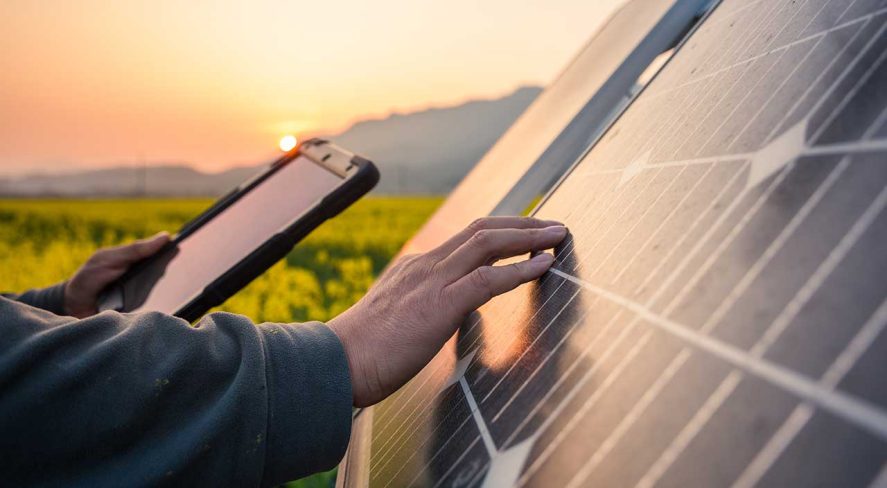
Power design determines whether off-grid cameras will work when it matters most

Mobile surveillance is one of the fastest-growing segments of the physical security industry. Analysts project that the market will nearly double by 2032, growing at roughly 10 percent annually, with trailer-mounted platforms accounting for approximately half of all deployments.
As construction sites, public venues, critical infrastructure, and municipalities adopt these platforms in record numbers, procurement conversations focus almost entirely on the most obvious factors: camera counts, resolution, analytics and coverage maps. Yet, even though these platforms earn their value precisely where the energy grid is inconsistent, unavailable or expensive to bring in, too little attention goes to the issue of power. When a mobile surveillance trailer loses power, coverage disappears with it. Such outages typically result from earlier decisions about power system design, expected load and whether the design accounts for real-world conditions.
The Power Budget: Where Reliability Begins
Reliable off-grid deployments begin with a power budget that answers two questions: How much power, in watts, does the platform draw at any moment? And how many watt-hours does this total over a day, week and month?
Every device on a mobile surveillance platform—cameras, radios, analytics hardware, mast lighting, wireless backhaul, environmental controls—draws from the same finite energy pool. A disciplined power budget turns that reality into numbers that can be reasoned about. In practice, engineers build the budget device by device, capturing wattage and duty cycle, and the output is a daily energy requirement. That number, combined with the target runtime and climate, should drive decisions about how much solar generation is needed during the worst season, how large the battery bank must be to survive nights and storms and whether a generator is an optional fuel saver or the reliability backbone.
Thermal management is often overlooked. In hot climates, cooling systems add continuous loads that are frequently underestimated. In cold environments, battery efficiency drops, reducing usable capacity. These factors are real and recurring.
Three Building Blocks, One System
Beneath every mobile surveillance platform, the same three building blocks are at work.
- Power consumption is the live, always-changing load, and each addition to the payload pushes the baseline draw higher.
- Power generation is how energy enters the system, whether through solar arrays, generators or shore power when available.
- Power storage bridges the gaps when generation drops, carrying the system through nighttime hours, multi-day storms, winter low-sun conditions and temperature extremes that drive up thermal loads.
Reliability emerges when these three elements are sized and tuned together, then validated against the actual conditions under which the platforms will operate, not against an averaged weather model from an unusually good year. A basic single-camera trailer with limited networking might run comfortably within a modest solar and battery budget. A multi-camera platform with active analytics, lighting and environmental management can easily double or triple the demand.
The Limits of Solar-Only Designs
Solar-only platforms have obvious appeal. They operate quietly, require no fuel, and reduce mechanical complexity. In the right circumstances, they perform well. Those circumstances usually involve a modest, tightly controlled power budget; brief, managed deployment windows; sites with good panel orientation and minimal shading; and missions that can tolerate occasional downtime.
The challenge is that solar production is inherently variable while surveillance missions are often mission critical. The sun sets every night, so stored energy must carry the system until morning. Storms and extended overcast conditions can suppress production for days. Smoke, dust and pollution reduce output. When daily energy consumption approaches or exceeds what worst-season sunlight can reliably replace, the deployment is no longer operating on a solar solution; it is operating on an outage timer.
Field experience shows that solar-only failures rarely arrive all at once. Instead, several forces gradually erode the original design margin.
The environment is the first force. Mast shadows move across arrays throughout the day, nearby structures introduce partial shading, and panels that perform well in summer struggle as the sun sits lower in winter. Two trailers placed only a few blocks apart can produce very different outputs due to local shading or microclimatic differences.
Mission creep is the second force. Very few platforms remain in their original configuration for long. A deployment that began with a single camera and basic connectivity may gradually gain additional cameras, onboard analytics, upgraded radios, or brighter lighting. Each addition improves capability, but, collectively, raises the baseline energy demand. Unless someone revisits the power budget, the design slowly drifts away from its original assumptions. A practical audit should involve identifying every device added since the platform left the integrator and comparing that list to the configuration used to size the solar array and battery bank. The resulting gap frequently explains why a unit that once operated comfortably now struggles after storms.
System aging is the third force. Solar panels lose efficiency over time, with industry estimates typically around one-half percent per year. Combined with shading and load growth, that gradual decline can push a previously stable system into a state where it can no longer fully recover after periods of poor weather. From the field, none of this looks like a slow decline. A trailer appears fine until it suddenly goes offline, often at the exact moment operators need visibility the most.
The Concept That Separates Architectures
One concept explains the practical difference between power architectures more clearly than almost anything else: Energy margin. This is the gap between the power a system needs and the power it can produce under difficult conditions. When that margin is large, the system absorbs storms, seasonal shifts, unexpected loads, and equipment aging without approaching failure. When the margin is small, minor disruptions compound until the system runs out of energy.
Solar-only systems often operate close to that boundary because their margin depends entirely on consistent sunlight. Hybrid systems address the problem differently by adding a controllable energy source. When solar production drops or load increases, generator runtime automatically expands to restore balance. Energy shortages do not typically cause outages; they simply cause longer generator cycles.
Hybrid Architectures
Hybrid power systems, which combine a generator, battery storage and solar panels, are the architecture that serious off-grid applications turn to when uptime truly matters. Telecommunications sites, remote infrastructure monitoring, and long-term surveillance deployments all lean on the same model because it delivers deterministic uptime.
Each component plays a distinct role. The generator is the only element that can produce full power on demand rather than on the weather’s schedule, making it the backbone during storms, short winter days, and periods of elevated load. Batteries are storage, not generation; they hold energy produced by the generator and solar array and release it gradually, allowing quiet overnight operation and smoothing fluctuations between generator cycles. Solar serves as the efficiency engine, reducing generator runtime, stretching fuel, and lowering operating costs without becoming a single point of failure.
Modern control systems manage this balance automatically around a simple priority structure: Maintain surveillance coverage, protect the health of the power system, and minimize fuel consumption. When battery levels fall below a defined threshold, or when temperatures threaten reliable operation, the controller starts the generator, charges the batteries through the efficient portion of their charge curve, and shuts down before wasting fuel on low-efficiency trickle charging. Telemetry surfaces battery state of charge, solar production, and generator runtime, enabling operations teams to identify shading, rising loads, or aging equipment so they can schedule service before a site goes dark.
This architecture also changes the meaning of deployment autonomy, the length of time a platform can remain in the field without service. For solar-only designs, autonomy is ultimately limited by unpredictable weather and battery capacity. For hybrid designs, autonomy is primarily determined by fuel capacity and service schedules, variables that an organization can plan around.
Questions Security Leaders Should Ask
Evaluating power design does not require running engineering simulations. A small set of questions can reveal whether the fundamentals have been addressed.
- What power budget was used for this configuration, and how was it built?
- Can the vendor show real or modeled production curves for the deployment latitude during winter and shoulder seasons, not just peak summer?
- How does the system behave when battery levels are low and solar production is low?
- What sheds first, and how is the operations team notified?
- Is the generator a primary reliability anchor or merely a backstop if the solar plan fails?
- How much has the payload changed since the original design, and how long do units actually stay in place?
These questions allow organizations to classify sites and platforms by risk. Low-risk cases combine constrained loads, short deployments, favorable sun and tolerant missions. High-risk cases mix heavier payloads, long-term deployments, challenging climates, and locations where being offline is simply not acceptable. Treating solar-only configurations as a deliberate design choice rather than a default allows security teams to shift from reacting to outages to planning for reliability.
Power Design Ultimately Determines Uptime
A platform with a disciplined power budget and an appropriate energy architecture does more than reduce downtime. It creates operational trust. The confidence that, when an incident occurs, the system will be online, watching and recording. The video management system depends on the feed, the monitoring center depends on the connection, and the response team depends on the alert arriving when conditions change.
For leaders seeking to extend security beyond buildings and fixed camera networks, the goal is not simply to deploy a trailer with cameras. The goal is to extend the reach of the security program with a platform that remains visible, connected and operational in the moments that matter. Reliability is not an accident. It is the result of deliberate power design.
The views and opinions expressed in guest posts and/or profiles are those of the authors or sources and do not necessarily reflect the official policy or position of the Security Industry Association.
This article originally appeared in the fall 2026 edition of SIA Technology Insights.
 Back to Top