
Making the Technical Make Sense: Lessons From AcceleRISE
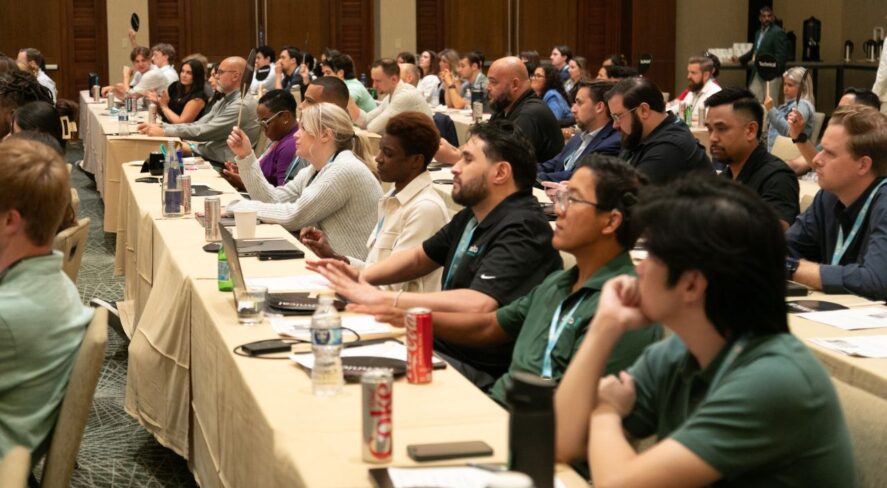
What happens when a year of doubt about how technical this industry might be meets two sessions that prove you can keep up? Confidence, a notebook full of takeaways and proof that this community knows how to bring newcomers along.
I joined the security industry just one year ago, in August 2025. AcceleRISE 2026, held Aug. 3–5 in San Diego, California, was my first time attending the event in person. Going in, I had one honest question on my mind: Would a single year of experience be enough to keep up with the technical side of this industry, or would I spend the week nodding along and Googling everything after?
The networking alone answered part of that question. I met young professionals from Northland Controls, Allegion and ZKTeco, and there were more good conversations than I could keep track of, each one a small window into a different corner of the industry and how someone else found their way into it.
But it was two sessions in particular that stuck with me the most: “Cyber 101 for the Physical Security Professional” and the GSOC session on where security operations meets engineering. Both covered real technical ground. Both broke it down so it actually stuck.
Cyber 101 for the Physical Security Professional
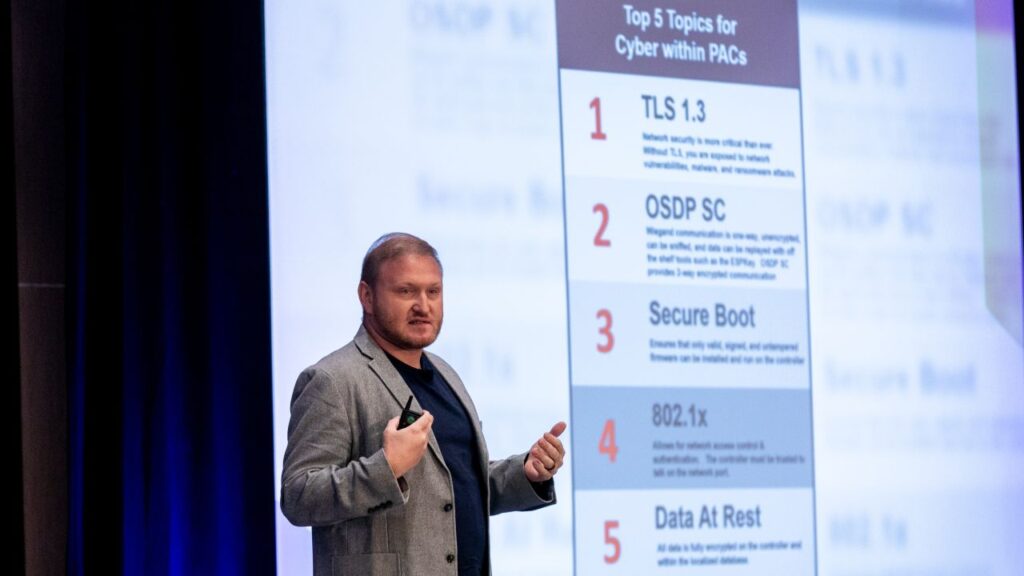
Jeremy Fromm walked the room through how criminals actually gain access to a building’s systems, virtually through the network and physically through hardware like card readers, and what the industry has built to close those gaps. The comparison between Wiegand and the SIA Open Supervised Device Protocol (OSDP) standard was the moment it clicked for me. Wiegand, the older protocol used to send card data from a reader to a controller, sends that data unencrypted with no way to confirm it wasn’t intercepted or replayed. OSDP closes that gap: It encrypts the communication and verifies the data arrives intact. Once I understood it that way, as a weak link versus a secured one and not just an acronym on a slide, the reasoning behind modern access control design made complete sense.
A few takeaways I walked away with:
- Wiegand offers no encryption and no way to confirm data wasn’t tampered with, which makes it vulnerable to replay attacks.
- OSDP Secure Channel encrypts reader to controller communication and should be the standard, not the exception.
- A weak link anywhere in the chain, especially one tied back to you, is a real liability.
- The goal across any system should be end-to-end encryption, not just encryption at one point in the chain.
- Technical security concepts are only intimidating until someone frames them around a clear before and after, like Wiegand versus OSDP.
Where Security Operations Meets Engineering
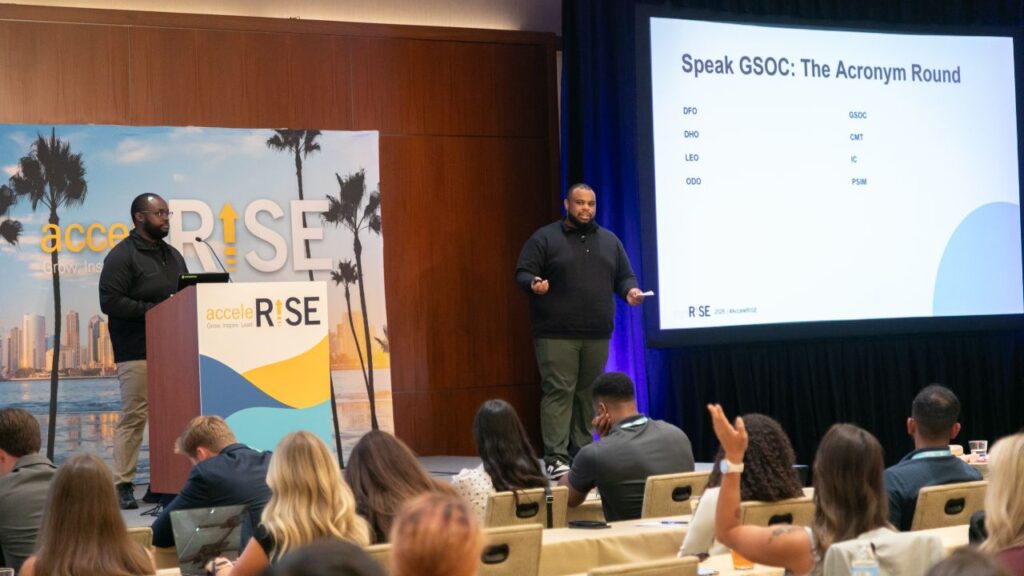
William Pearl and Rey Williams from HiveWatch gave an inside look at the global security operations center (GSOC), what it does around the clock, the pain points operators face and how engineering and artificial intelligence are starting to reshape the work. The session opened with a day in the life of a GSOC operator. A glass break alarm at 2:14 a.m. Cameras and access logs checked within a minute. Guard force and law enforcement dispatched shortly after. A mass notification sent out. The incident documented, all before the next alarm comes in. That walkthrough gave me real appreciation for a role I had only known by name, and it made the pain points that followed land with real weight.
A few takeaways from this one:
- A GSOC is a business function first. Understanding what it actually does day to day matters before deciding how to tool it.
- Alarm fatigue and tool sprawl are the biggest daily frustrations for operators, not a lack of technology.
- The build, buy or need it decision should always start with the problem, not the solution.
- AI is already changing the numbers. 91% of alarms resolved without a human operator, forty hours saved per week, and monthly alarm volume cut from fifteen thousand down to eight thousand.
- Even with AI in the loop, the thinking still belongs to the people running the room. AI is a thought partner, not a replacement.
A year into this industry, I expected AcceleRISE to remind me how much I still had to learn. It did that. But it also proved something more valuable, that the people teaching this industry know how to bring newcomers along. Complex, technical material doesn’t have to be a barrier to entry. If these two sessions and every conversation in between are any indication, the door is wide open. You just have to walk through it.
 Back to Top