
From Hello to Hired: Mastering First Impressions and Building a Strong Network in the Security Industry
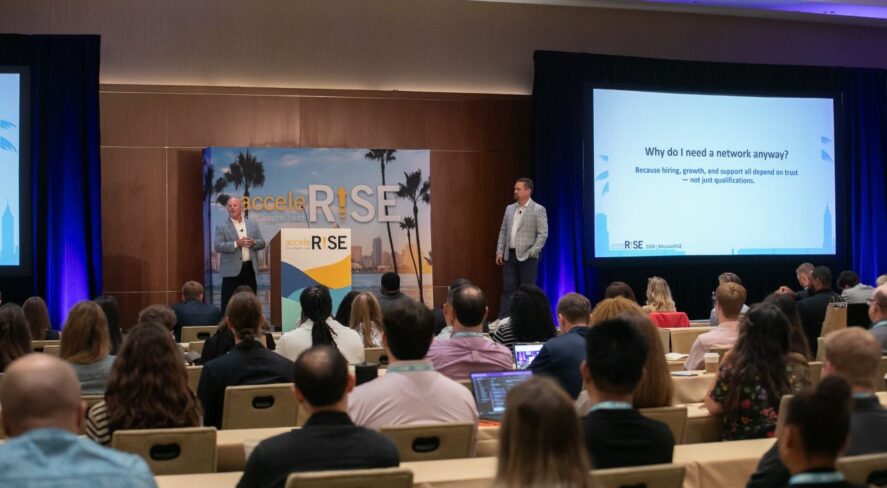
Experts from Medeco and ASSA ABLOY Door Security Solutions shared insights on how to network with confidence at AcceleRISE 2026.
In a relationship-based industry like security, who you know and how you show up matters, yet many young professionals don’t know where to start when it comes to networking authentically or presenting themselves with confidence. At a recent presentation during the AcceleRISE conference, experts Jordan Burnsed, director of business development at Medeco, and Angelo Faenza, head of digital access solutions at ASSA ABLOY Door Security Solutions, shared practical strategies, real-world scenarios and interactive exercises tailored to help emerging security industry leaders effectively build their networks. Here are some key takeaways:
Your network is crucial for your personal and professional development!
Having a strong professional network is important because hiring, growth and support all depend on trust—not just qualifications. Your network serves as a personal development system, offering valuable opportunities for learning and support. Those in your network can help you bounce ideas off people with different skills and experience; see blind spots in your team, market or approach; get practical advice before small issues become big ones; feel supported in processing difficult things; normalize the struggle and keep perspective; and feel less isolated in career challenges.
“Find people that have similar pain points to you,” said Burnsed. “It helps to have somebody else that’s been in that or that is actively doing that, and they can give you feedback and share in that pain.”
Your network can help you land that next opportunity or project. The security industry isn’t a “secret club”—finding the right people for a job is based on fit, context and trust. People are hired to fit both the role and the culture, and jobs need to fit you, too. A network helps others understand how you work—before the interview. Your relationships can vouch for your judgment, energy and potential. Conversations reveal what a job is actually like. And having visibility in the industry creates opportunities that resumes rarely uncover.
Trust is earned over time, but lost quickly.
Networking only works when both people feel respected, useful and safe enough to be honest. It’s a two-way street, with give and take, and vulnerability and consistency are paramount.
You don’t have to “collect them all.”
Quality over quantity is key.
“Networking is not Pokemon—you don’t need to select every single person,” said Burnsed. “Start small, make it accessible.”
A big follower count doesn’t mean you have a strong network—good networks are based on trust, meaningful connection and useful follow-through. Let trusted people connect you to others, and build connections rather than simply collecting contacts.
“If you were in trouble and needed help with your work, how many people in your network could you count on? Think about that quality of who it is you can go to, who really would be there for you in a time of need, and build that network around them,” said Faenza. “Spend that time, build that connection and make it about more than just work.”
Awkward is not failure—it’s the starting point.
Awkwardness is something we all have in common and is normal as you work to grow your career and network. Remember that the person you’re trying to connect with is probably managing the same nerves. Reduce pressure by focusing on curiosity, not performance. The goal is a real conversation, not a perfect performance.
Make a good first impression.
People naturally assess trustworthiness, energy and approachability in the first moments. Pay attention to your body language (don’t hug the wall, move around, make eye contact and keep your posture open). Focus on being present and connect through attention and curiosity instead of trying to impress people.
“Eye contact is so important—be confident, don’t look down, don’t look away,” said Faenza. “Have some eye contact. And avoid looking at your phone. If you get a message, can it wait?”
Watch for red flags like dominating the conversation, pitching too quickly, name-dropping to prove value or redirecting everything back to yourself. Rest with a concise answer, then a question. Show curiosity about their role and priorities. Offer a real thank-you or useful follow-up. And practice self-awareness—pause, breathe and rebalance.
Networking is a slow burn.
Strong relationships develop gradually through repeated positive interactions.
- Start by saying hello, asking a real question and noticing what matters to the person.
- Follow up by sending an article you mentioned, making an introduction or saying thank you while it’s still fresh.
- Be a support—offer help to that contact before you need to ask for help from them.
- And repeat—consistency builds trust, and trust creates opportunity.
Make time for the network you already have.
Find opportunities where you already are. Colleagues and managers who know your work are a great start, as are customers, partners and vendors who see the industry differently. Leverage the people you meet at events and trade shows, as well as alumni groups and community spaces. Call when a conversation deserves more than a text. Follow up with your network to share useful details, make introductions or send thank-yous. Treat networking as a continual practice, not a one-time task.
Quick tips for making a connection at an industry event:
- Wear your name badge on the right side (so people see it when you shake hands) and at the right level (not at an awkward spot that you don’t want people to have to look at).
- Use a short, flexible intro that invites a real response. Start with an intro (e.g., “Hi Angelo, I’m Jordan. What brings you to the conference?”), then show curiosity (e.g., “That’s interesting—how long have you been in the industry?”, and end with an invite (e.g.,” I have enjoyed getting to know you—could we connect on LinkedIn?).
- Use the person’s name while you’re having that first conversation. Use it multiple times so you can better remember it!
- Take a selfie with them and share it on LinkedIn or with them after the event.
- In a room? Draw a seating chart to better recall everyone you met.
- Forgot a name? “Phone a friend” and ask them to remind you.
Learn more about AcceleRISE here. And access more opportunities and resources from RISE here.
 Back to Top