
Where Security Operations Meets Engineering: Insights From AcceleRISE 2026
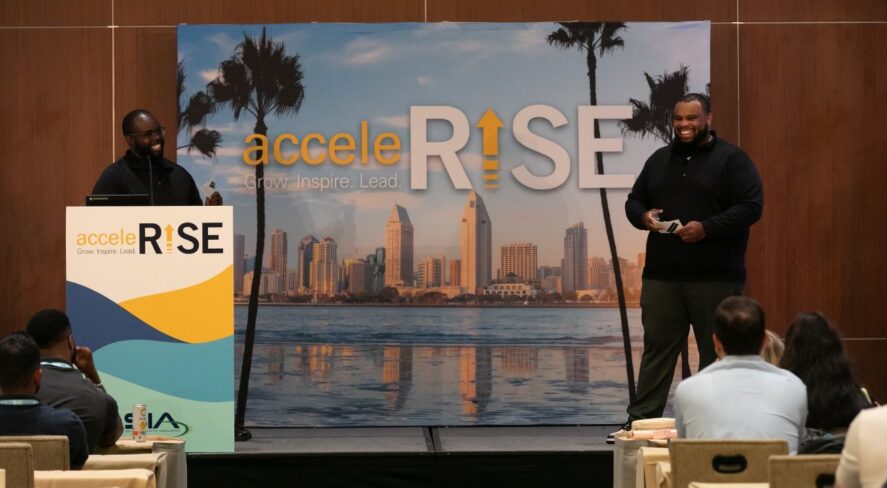
Experts from HiveWatch highlighted pain points in security operations and how security teams are using automation to grow scale and efficiency.
Global security operations centers (GSOCs) act as a core function for mitigating an organization’s risks, protecting assets and people from threats and monitoring and responding to security events across multiple locations. In a recent presentation at AcceleRISE 2026, William Pearl, senior manager of GSOC operations at HiveWatch, and Rey Williams, senior software engineer, artificial intelligence (AI) operator and app experience at HiveWatch, examined cross-functional collaboration between security teams and engineering teams in the age of AI, pain points in security operations and how automation can be used in a way that allows security teams to be more efficient and scale to support more clients or expanded operations/responsibilities.
Here are some key takeaways:
Inside the GSOC: What It Is, What It Does and What It Costs to Run One Well
A GSOC focuses on physical security—alarms, cameras and dispatch. Elements typically include a 24/7 security hotline, access control and visitor management, alarm response, surveillance monitoring and reviews, guard force and law enforcement officer dispatch, threat intelligence monitoring and mass communications. GSOC operators must balance monitoring and responding to alarms, camera review, dispatching guards, looping in law enforcement, mass-notifying site teams, documenting and more—all on a single alarm, and “the queue doesn’t stop,” said Pearl.
Pain points for operators include alarm fatigue, overwhelm at the number of tools to manage and the sense that “Everything is false until it’s not,” while managers running the room face operator fatigue and turnover, the need to prove value to the business and tool sprawl without integration.
The GSOC Solutions Landscape
Vendors working with GSOCs typically sell products like cameras, access control, physical security information management, analytics and monitoring services, said Pearl, but what really resonates with GSOC managers are offerings that solve “a pain I named, fits my stack and shows value fast.”
“What wastes my time are features without workflows and rip-and-replace pitches—and selling ‘BS,’” said Pearl.
When evaluating whether a solution is what your GSOC needs, Pearl outlined the following questions to consider:
- What problem am I solving, and what are my service-level agreements?
- Why does anyone care? (Tie it to business risk.)
- Has someone already solved this? (Don’t reinvent the wheel!)
- When do I bring in people outside my organization?
Where Engineering Meets Security: What AI Changes for Security Ops
Today, Willams said, AI in security falls short in terms of the alerts it can’t actually close, thousands of false alarms and pilots that never reach the floor. AI is delivering for GSOCs, however, in helping operators face less noise, giving hours back in every shift and helping new officers get up to speed in their first week.
“The busy work is going away—the GSOC isn’t,” Williams said.
Pearl and Williams encouraged security professionals to see AI as a thought partner where the thinking stays yours. This approach includes frontloading the thinking by setting up good frameworks first, as well as breaking problems down to first principles and then building them back up.
Final Takeaways:
- A GSOC is a business function. Know what it does before you tool it.
- Need it, build it, buy it, in that order.
- Engineering and ops can now iterate in the room and in the same week.
“In this era of ‘yes, let’s make it,’ be someone who’s grounded and say ‘who wants it?’ or ‘why?’,” said Williams.
Learn more about AcceleRISE here. And access more opportunities and resources from RISE here.
 Back to Top