
SIA New Member Profile: Sharlic
New Security Industry Association (SIA) member Sharlic offers a service delivery platform specifically built for channel sales. The company is headquartered in Malmö, Sweden, with distributor, manufacturer and integrator partners across the Nordics, wider Europe and North America, and has global roots and relationships.
SIA spoke with Karl Hill, CEO and co-founder of Sharlic, about the company, the security industry and working with SIA.
Tell us the story of your company.
Karl Hill: I’ve been in the security industry for most of my career, and for years I watched recurring software and services get a lot of attention in business plans and strategy decks. But on the ground, it just didn’t scale the way everyone expected. Distributors and integrators liked the idea of recurring monthly revenue (RMR), yet growth stalled.
I spent about a year digging into that gap, talking to manufacturers, distributors and integrators across brands and mapping out how renewals actually moved through the channel.The pattern was the same everywhere: people aren’t bad at handling recurring services—the system around them simply wasn’t built for it. Everything was wired for one-off projects, not ongoing relationships and monthly revenue.
Sharlic was born out of that realization. We didn’t start with a perfect answer—we started with a clear problem: the channel needed a shared “infrastructure” for recurring services. Today, Sharlic is our attempt to provide that missing layer so that manufacturers, distributors and integrators can make RMR work at scale and turn more of their installed base into long-term service revenue, without reinventing their businesses.
What solutions/services does your business offer in the security industry? And what makes your offerings or your company unique?
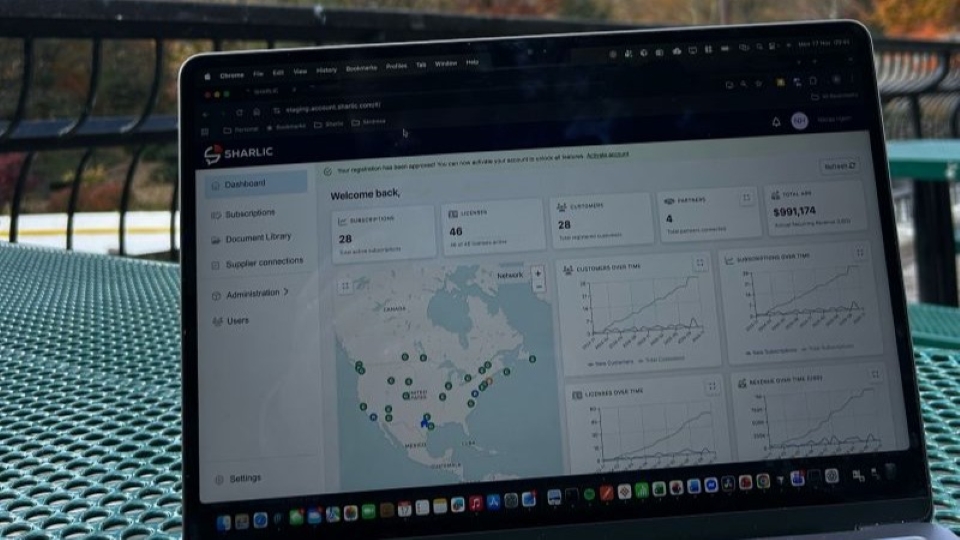
KH: Sharlic is a service delivery management platform for the security channel. We give distributors and integrators one place to consolidate vendors and price lists, link licenses, subscriptions and contracts to the right end customer with the right term and margin and automate recurring services in a way that makes it easy to attach them to more projects and grow RMR with every customer.
What’s unique is that Sharlic also acts as a license management system for manufacturers. Vendors building or shifting into RMR can use Sharlic as their backbone for license life cycle, channel awareness and automated revenue sharing, without forcing everyone into a new proprietary portal. In short, we’re the neutral “service rails” under manufacturers, distributors and integrators that keep RMR flowing through the whole ecosystem.

What is something we might not know about your company—or something new you are doing in security?
KH: That we’re not a security company. We’re a software company that happens to care a lot about one very specific part of the security industry: how licenses, renewals and revenue actually flow through the channel. It’s a small, boring piece of the puzzle, until it breaks. Our job is to quietly keep that plumbing working so the real security experts can focus on protecting people and assets and turning those deployments into durable, growing service business.
What is your company’s vision, and what are your goals for the security industry?
KH: Our vision is simple: hassle-free recurring revenues for the entire security channel. We want every license, subscription and cloud service sold through distributors and integrators to renew on time, with everyone in the chain getting their fair share and every project having the potential to become a long-term revenue stream rather than a one-off sale.
At an industry level, our goal is to take friction out of RMR so more great technology actually reaches the market and stays in service. If we can give manufacturers a ready-made license and channel engine and give distributors and integrators clean tools for managing recurring services, then more of the systems they install will carry predictable, growing RMR over time.
What do you think are the biggest opportunities in the security industry right now?
KH: The big opportunity is to turn today’s “RMR potential” into real, predictable recurring business. Video, access, cloud storage and analytics are all moving toward subscription and service models, but a lot of revenue is still stuck behind fragmented processes and unclear ownership of renewals.
The companies that make recurring services easy to sell, easy to renew and easy to share across the channel will win. That means clear economics for each tier and infrastructure that lets integrators confidently add RMR to every project and grow the value of their customer base over time.
What are your predictions for the security industry in the short and long term?
KH: In the short term, manufacturers will keep pushing recurring models, while distributors and integrators feel the growing pain of handling multiple vendors’ renewals, terms and pricing structures. We’ll see more missed renewals and margin erosion where the back-end processes can’t keep up.
Longer-term, I think the industry standardizes on a few neutral “service rails”—infrastructure layers that handle license lifecycle, channel hierarchies and revenue sharing across many vendors. When that happens, RMR becomes a normal part of every security project, not a side quest that only a few players can manage, and the recurring value of each deployment becomes much easier to realize.
What are the biggest challenges facing your company and/or others in the security industry?
KH: The hardest part is that infrastructure is invisible when it works. Everyone feels the symptoms— involuntary churn, operational bottlenecks, slowed adoption—but the root cause sits in fragmented data and processes between manufacturers, distributors and integrators. Fixing that is a system project, not a single-company project.
More broadly, the industry is still figuring out who owns what in a recurring world: who gets notified, who acts on a renewal, who gets which slice of the revenue. Until those questions are backed by shared tools and workflows, RMR will keep creating uncertainty around who can confidently sell and expand services. That’s the gap we’re obsessed with closing.
What do you enjoy most about being at your company—and in the security industry?
KH: I genuinely enjoy working with the people who keep critical infrastructure running but rarely ask for attention. Integrators pulling late nights on projects, distributors keeping things moving, manufacturers pushing the tech forward. When we help them strengthen their margins and grow recurring revenue on the systems they already sell, that’s very satisfying.
The security industry is also very mission driven. Even competitors share a basic goal: to keep people, assets and operations safe. Being able to contribute by fixing a small but important part of the machine— how services are delivered, renewed and billed—is what makes Sharlic feel worth the effort.
What does SIA offer that is most important to you/your company? And what do you most hope to get out of your membership with SIA?
KH: For us, SIA is a way to be in the same room with manufacturers, distributors, integrators and other innovators who care about where the industry is heading. The research and education work help us understand where RMR, cloud and service models are really going, not just what’s in the marketing decks.
We’re especially excited about SIA’s Startups in Security community, which gives early-stage companies like Sharlic a structured way to plug into that ecosystem, from access to research and tools to dedicated activities for startups at events. We want to contribute our hands-on experience with recurring revenue and channel operations to those conversations and learn from others who are wrestling with the same transition.
How does your organization engage with SIA? What are your plans for involvement in the next year?
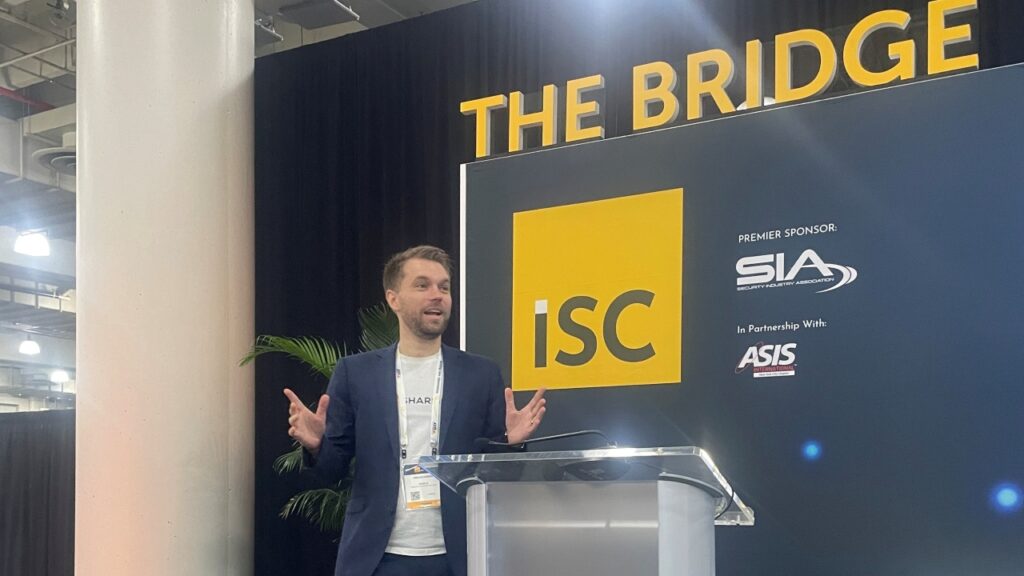
KH: Our first big touchpoint with SIA was at ISC East in New York, where we joined other startups to pitch our solution to investors and industry leaders, a great way to pressure-test our story with people who live and breathe security every day. Going forward, we intend to stay closely involved in SIA’s Startups in Security community and related activities.
Over the next year, we hope to participate in SIA programming at ISC West, ideally exhibiting as part of the Startups in Security experience. We also hope to contribute content and data points around RMR, channel enablement and service delivery automation. Our aim is to be an active member—sharing what we’re seeing in the field and helping build the “service rails” the industry needs for the next decade.
The views and opinions expressed in guest posts and/or profiles are those of the authors or sources and do not necessarily reflect the official policy or position of the Security Industry Association.
 Back to Top