
AI and the Impact on Evidentiary Standards
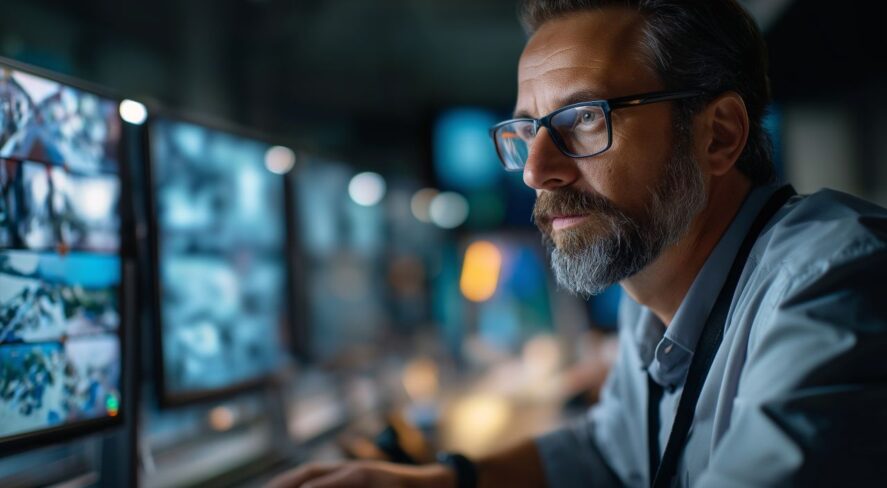

Artificial intelligence has brought new capabilities to the security industry. It has expanded how we detect, understand and respond to risks. Today’s AI solutions can analyze vast amounts of data, recognize patterns, flag anomalies and support rapid and precise decision-making. It has allowed organizations to improve workflows and ease the load on human operators. AI is no longer just a hot topic but a force within the industry.
But as the capabilities of AI accelerate, the industry must ask a critical question: What happens when AI is used to counterfeit security recordings?
AI tools have made the manipulation of images, video and audio more accessible and more convincing than ever. We all see it. On our social feeds, in the news and, before we know it, in our security footage. A single altered frame or subtly edited sequence can erode confidence in surveillance footage—undermining internal investigations, public trust, regulatory compliance and even courtroom admissibility. The result? A landscape where security professionals are tasked not only with capturing data but also with proving that the data has remained intact.
There are nearly 9 billion devices that capture video that our institutions use for evidence, news, policy, claims, payouts, arrests and convictions. With the growth of AI and deepfake technologies, very little footage will soon be able to stand on its own without scrutiny. AI-generated videos are becoming increasingly common, and AI-powered video editing tools can warp reality in an instant, transforming recorded reality into fiction with the click of a button. As the scope and scale of synthetic content accelerate, it will become increasingly challenging to distinguish between fiction and reality. But not all hope is lost.
Traditional defenses, such as watermarks and post-hoc forensic analyses, are insufficient in an era of AI-driven manipulation. They’re reactive, fragile, and easily stripped away. The key is to stop playing defense after the fact and instead protect video at the moment it is created. By securing and validating content at the moment it is captured, recording devices can create independent, verifiable proof that the footage is genuine. That proof stays with the file wherever it goes, making verification possible at any point down the road. This forward-looking method cuts out the back-and-forth guesswork and the constant scramble to keep up with digital manipulation, protecting authenticity instantly and at scale.
It’s more important now than ever to protect the authenticity of video security content. As video manipulation tools advance and AI-based synthetic content becomes hyper-realistic, historical data integrity methods are becoming inadequate, and evidentiary standards are going to be challenged. The security industry needs to get in front of this trend to help protect clients and keep digital evidence reliable and admissible.
The views and opinions expressed in guest posts and/or profiles are those of the authors or sources and do not necessarily reflect the official policy or position of the Security Industry Association.
This article originally appeared in All Things AI, a newsletter presented by the SIA AI Advisory Board.
 Back to Top