
Securing Multi-Tenant Properties: Key Insights From SIA’s Latest Symposium
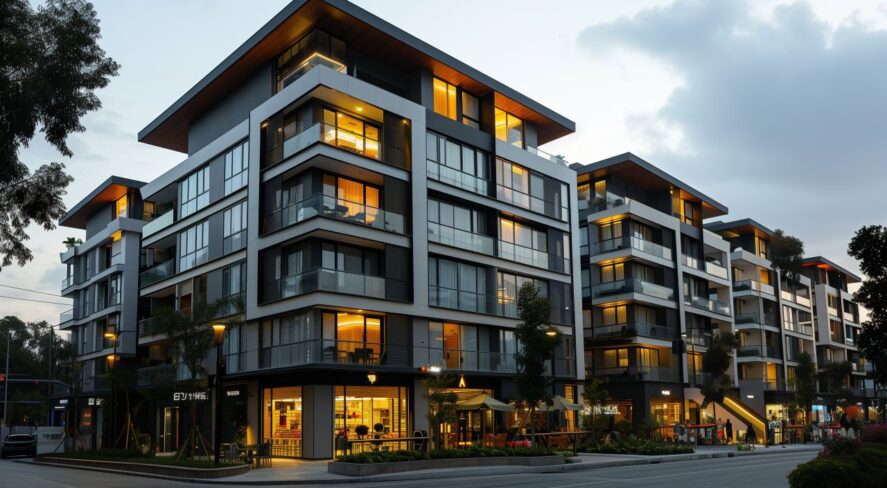
The Security Industry Association (SIA) recently hosted a comprehensive Vertical Insights symposium on multi-tenant security, bringing together industry experts to discuss the evolving challenges and solutions for protecting apartments, condominiums, student housing and other multi-tenant facilities. The event featured three compelling presentations that addressed everything from modern intercom systems to crime prevention through environmental design (CPTED) to legal liability concerns, offering valuable guidance for property managers, security integrators and facility operators.
Video: Vertical Insights Multi-Tenant Building Security Symposium
The Evolution of IP Intercoms: Beyond the Buzzer
Dom Albano, program manager, intercoms at Axis Communications, opened the discussion by noting the importance of CPTED and explaining how the layout and level of maintenance of a property can discourage or invite criminal activity. He then explored how modern video intercoms have transformed from simple communication devices into comprehensive security systems. The shift from analog to IP-based systems represents a fundamental change in capability and functionality.
Today’s IP intercoms offer HD video and audio quality—a dramatic leap from the grainy 0.3-megapixel images of older systems to crisp 2, 5 or even 8-megapixel resolution. This enhancement transforms intercoms into effective video surveillance endpoints, capturing clear facial details and clothing descriptions at entry points.
A critical advantage of IP systems is their interoperability through open standards like Session Initiation Protocol (SIP) for voice/video calls, ONVIF Profile T for video management integration and SIA Open Supervised Device Protocol (OSDP) for access control. These standards enable intercoms to function as part of a unified security ecosystem rather than isolated devices. Additionally, Power over Ethernet (PoE) simplifies installation by delivering both network connectivity and power through a single cable.
Perhaps most significantly, modern intercoms integrate seamlessly with smartphones, allowing residents to answer calls, visually verify visitors and grant access remotely from anywhere in the world. This mobile integration doesn’t sacrifice security for convenience—it enhances both simultaneously by providing flexible access management with complete audit trails.
Navigating the Proptech Landscape
Jason Newland, multi-family specialist and electronics team lead at Allegion, addressed the broader context of property technology (proptech) in multi-tenant buildings. PropTech encompasses not just access control and intercoms, but also lighting, climate control, leak detection and resident amenities—all designed to balance security with convenience and operational efficiency.
Newland emphasized that property owners don’t need to jump immediately to cutting-edge solutions. Instead, they can adopt a staged approach, progressing from basic mechanical locks through electronic systems to fully integrated smart building platforms as budgets and needs allow. This maturity spectrum acknowledges that while brass keys remain a form of access control, the industry is rapidly moving toward mobile credentials, near-field communication (NFC) tap-and-go access and wallet-based digital keys.
Credential technology represents a critical decision point. Modern smart credentials and mobile access are significantly more secure than older proximity cards, which can be easily cloned. Mobile credentials also address common concerns—NFC-enabled phones can unlock doors even when the battery is dead, and most people are far less likely to lose their phone than a physical key or fob.
The multi-family sector presents unique challenges distinct from other commercial verticals. After-market installations now significantly outpace new construction ($5.5 billion versus $750 million), driving demand for wireless solutions that avoid costly cable runs through existing structures.
The Legal Reality: Negligent Security Lawsuits
Charles Johnson, founder and CEO of NGA Security Advisors, discussed negligent security claims—lawsuits filed against property owners when criminal acts occur on their premises. These cases allege that inadequate security measures contributed to injuries suffered by victims of crimes like assault, robbery or murder.
In Florida alone, approximately 342 negligent security cases were filed in state courts during fiscal year 2023–2024. Johnson highlighted one case where a jury awarded $100 million in damages following a shooting death at a Miami-area condominium, with the property management company held 57% liable ($57 million).
Florida has responded with a law (Florida Statute 768.0706) that, while not mandatory, provides a legal safe harbor for multi-family properties that meet specific security standards. Compliance requires CPTED assessments every three years, proper lighting levels, video surveillance at all entry/exit points with 30-day retention, credentialed locks on amenity areas like pools, proper dwelling unit security features and documented employee training.
Some property management companies are applying the standards nationwide, recognizing that doing so in Florida but not in other markets could create liability exposure.
The Bottom Line
The symposium underscored that effective multi-tenant security requires a holistic approach combining modern technology, thoughtful design principles like CPTED and proactive risk management. As IP-based systems continue to mature and legal liability concerns intensify, property owners and security professionals must stay informed about both technological capabilities and evolving legal standards. The convergence of these factors makes now an ideal time to reassess and upgrade multi-tenant security strategies.
Want even more on this topic? You can watch the full symposium here.
In creating this blog, content from the Vertical Insights Multi-Tenant Building Security Symposium was summarized using multiple large language models and reviewed by human editors.
 Back to Top