
SIA New Member Profile: Phantom Fog
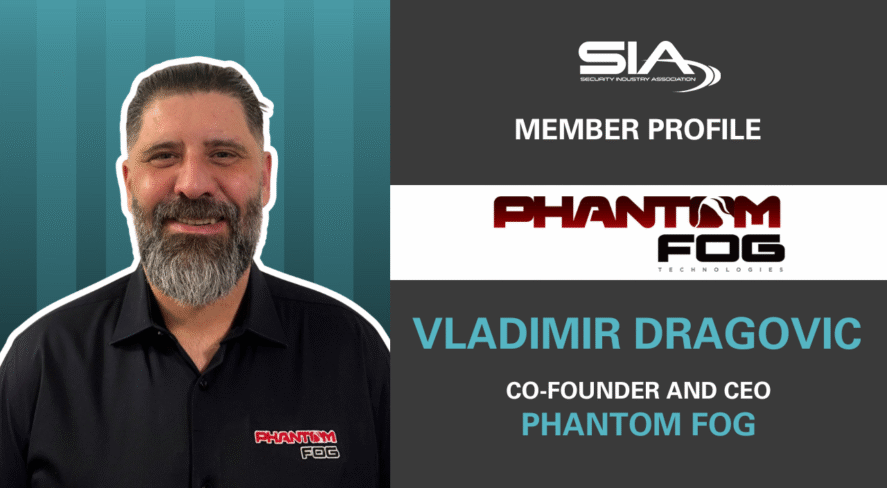
New Security Industry Association (SIA) member Phantom Fog is the exclusive North American licensee of Enforcer Systems, supporting every aspect of the security ecosystem to deliver, deploy and scale real-time fog defense across high-risk environments. The company is headquartered in Ancaster, Ontario, Canada.
SIA spoke with Vladimir Dragovic, co-founder and CEO of Phantom Fog, about the company, the security industry and working with SIA.
Tell us the story of your company.
Vladimir Dragovic: My co-founder, Al Frisina, and I have been small business owners, and friends, for over two decades.We know what a break-in really costs: not just stolen goods, but also downtime, cleanup, repairs and the emotional weight that comes with it.
As break-ins continued to target local jewelry stores and small businesses within our community—owned by people just like them—Al and I started to look for a better system of defense. That’s when we found Enforcer Systems. Founded in Australia, trusted globally, these fog-based systems offer what traditional security can’t: real-time defense. The moment an intruder breaks in, Enforcer Systems fills the space with a dense, nontoxic fog that limits visibility and forces intruders to flee. No confrontation. No stolen goods. Just fast, effective protection. Phantom Fog exists to bring that same protection to North America—protecting the businesses we count on and the people behind them.
What solutions/services does your business offer in the security industry? And what makes your offerings/company unique?
VD: Phantom Fog Technologies provides fog-based security solutions designed to stop theft in real time. Our core offering is the Enforcer fog security system, which integrates seamlessly with existing alarm and intrusion systems to deliver immediate physical intervention during a break-in.
Unlike traditional security solutions that only detect or record criminal activity, Phantom Fog actively prevents theft while it is happening. When triggered, our system rapidly fills the protected area with dense, nontoxic, residue-free fog, eliminating visibility within seconds and forcing intruders to abandon the attempt.
What makes Phantom Fog unique is our focus on real-time defense, ease of integration and professional-grade reliability. Our technology is:
- Compatible with all major alarm and monitoring systems
- Fast-acting (fog deployment in seconds)
- Safe for people, products, and electronics
- Designed specifically for high-risk, high-value environments
We also differentiate ourselves through a partner-first approach, offering training, certification, technical support and go-to-market assistance to integrators and distributors. Phantom Fog doesn’t replace existing security infrastructure—we enhance it, bridging the critical gap between detection and response.
What is something we might not know about your company—or something new you are doing in security?
VD: One thing many people don’t realize about Phantom Fog Technologies is that we are not just introducing a fog security product—we are redefining how intrusion response is delivered in real time.
Beyond stopping theft in seconds, we are actively building a next-generation, integrator-centric security platform that emphasizes reliability, false-alarm immunity and seamless interoperability with existing alarm and monitoring ecosystems. Our current focus includes refining advanced trigger logic, modular system architecture and professional-grade deployment standards to ensure consistent performance in high-risk environments.
What’s new is our emphasis on scalable partner enablement: structured certification programs, standardized installation protocols and service models designed to help integrators confidently deploy real-time defense as part of their core offering. This approach allows us to expand rapidly while maintaining quality, safety and trust across markets.
In short, we’re moving the industry beyond “alert and respond” toward automatic, in-the-moment theft prevention—without adding complexity for installers or end users.
What is your company’s vision, and what are your goals for the security industry?
VD: Phantom Fog Technologies’ vision is to transform physical security from a reactive model into one that delivers real-time protection. Our goal is to eliminate the gap between detection and response by making immediate, automatic intervention a standard part of modern security systems.
We believe the future of the security industry lies in proactive, integrated solutions that actively prevent loss rather than simply documenting it. Phantom Fog aims to set a new benchmark for intrusion response by combining advanced fog-based technology with professional-grade integration, reliability and safety.
Our long-term goal is to work alongside integrators, monitoring centers, insurers and end users to elevate security standards across high-risk environments. By making real-time defense easy to deploy, scalable and trusted, we aim to reduce losses, deter organized theft, and help reshape expectations of what effective security should do—stop the crime, not just report it.
What do you think are the biggest opportunities in the security industry right now?
VD: One of the biggest opportunities in the security industry right now is the shift from passive detection to active prevention. As theft becomes faster, more organized and more coordinated, traditional models built around alarms and cameras alone are no longer sufficient—this creates a major opportunity for technologies that can intervene immediately and change the outcome of an incident in real time.
Another key opportunity is better integration and interoperability across security systems. End users and integrators are looking for solutions that work seamlessly within existing infrastructures rather than adding complexity. Technologies that are easy to deploy, reliable and designed for professional installation are well positioned for rapid adoption.
Finally, there is significant opportunity in partner-driven growth models. Integrators and monitoring providers want differentiated, high-value offerings that increase recurring revenue and customer retention. Solutions that enhance their core services—while delivering measurable loss prevention—are becoming essential as the industry evolves.
What are your predictions for the security industry in the short and long term?
VD: In the short term, the security industry will continue to see rapid growth in demand for proactive and automated protection, driven by rising theft, organized retail crime and limited law-enforcement response times. Businesses will increasingly look beyond traditional alarms and cameras toward solutions that can reduce loss immediately, not just document incidents. Technologies that integrate easily into existing systems and demonstrate clear return on investment will see the fastest adoption.
In the long term, the industry will shift toward real-time, outcome-based security models, where success is measured by prevention rather than response. Physical security systems will become more intelligent, interoperable, and automated—combining detection, verification and intervention into unified platforms. Integrators will play a central role in this evolution, moving from installers of hardware to providers of comprehensive protection strategies.
Ultimately, the market will reward solutions that are proven, scalable and trusted, setting new expectations for what effective security should accomplish: stopping incidents before loss occurs, rather than reacting after the fact.
What are the biggest challenges facing your company and/or others in the security industry?
VD: One of the biggest challenges facing the security industry is outdated expectations of what “security” actually delivers. Many systems are still built around detection and documentation, while criminal activity continues to evolve in speed and sophistication. Bridging the gap between awareness and real-time intervention remains a critical industry-wide challenge.
For innovative companies like Phantom Fog Technologies, another challenge is driving adoption of new security paradigms. Technologies that actively prevent theft require education—for end users, integrators and insurers—to shift mindsets from reactive response to proactive defense. This means demonstrating reliability, safety and clear return on investment at scale.
Across the industry, false alarms, system complexity and integration friction also remain ongoing challenges. Solutions must be dependable, easy to deploy and interoperable with existing infrastructure to gain trust and long-term adoption.
Despite these challenges, they also represent opportunities to raise standards, improve outcomes and redefine how effective security is delivered.
What do you enjoy most about being at your company—and in the security industry?
VD: What we enjoy most about being at Phantom Fog Technologies is the ability to work on solutions that have immediate, real-world impact. In the security industry, you don’t have to guess whether your work matters—you see the results when theft is stopped, losses are prevented and businesses are protected in real time.
I also enjoy being part of an industry that is actively evolving. Security today requires innovation, collaboration and trust, and it’s rewarding to work alongside integrators, partners and customers who are focused on raising the standard of protection rather than settling for reactive solutions.
Most importantly, there’s a strong sense of purpose in this space. Helping shift the industry toward proactive, in-the-moment defense—and building a company that supports partners and delivers meaningful outcomes—is what makes the work both challenging and deeply fulfilling.
What does SIA offer that is most important to you/your company? And what do you most hope to get out of your membership with SIA?
VD: What SIA offers that is most important to Phantom Fog Technologies is industry credibility, collaboration and access to the broader security ecosystem. As an organization that brings together manufacturers, integrators, distributors and thought leaders, SIA plays a critical role in shaping industry standards, best practices and the future direction of security technology.
We value SIA’s ability to foster education, networking and advocacy, particularly as the industry evolves toward more proactive and integrated security models. Being part of SIA allows us to engage with peers, stay aligned with regulatory and technological developments and contribute to conversations that influence how security solutions are deployed and evaluated.
Through our membership, we hope to build meaningful relationships with integrators and partners, gain insight into emerging trends and help advance industry understanding of real-time, outcome-driven security solutions. Ultimately, our goal is to collaborate with the SIA community to raise the standard of what effective security can deliver.
How does your organization engage with SIA? What are your plans for involvement in the next year?
VD: Phantom Fog Technologies engages with SIA as a platform for collaboration, education and industry alignment. We view SIA as a key resource for staying informed on market trends, standards development and best practices across the security industry.
Over the next year, we plan to actively participate in SIA events, webinars and educational programs, particularly those focused on emerging technologies, integrator enablement, and physical security innovation. We also intend to leverage SIA’s member resources to support our go-to-market efforts, including market research, regulatory guidance and industry insights.
Additionally, we see value in engaging with SIA’s committees and working groups where appropriate, contributing our perspective on real-time intrusion prevention and integrator-focused security solutions. Our goal is to be an active, collaborative member—both learning from the community and contributing to its continued advancement.
The views and opinions expressed in guest posts and/or profiles are those of the authors or sources and do not necessarily reflect the official policy or position of the Security Industry Association.
 Back to Top