
SIA New Member Profile: InSight Security Group
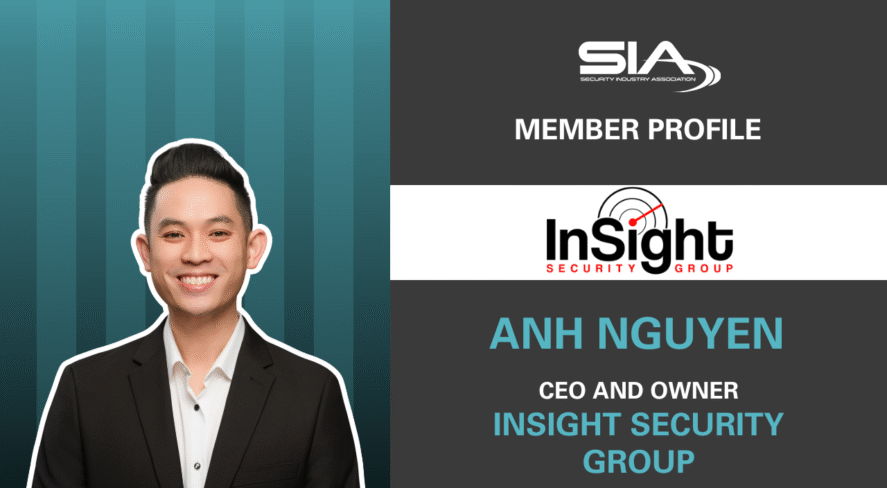
New Security Industry Association (SIA) member InSight Security Group (ISG) provides governance-driven security services that support organizations across background screening, contextual interpretation, investigative clarification and identity life-cycle alignment. The company is headquartered in Northern Virginia and operates within the broader Washington, D.C., Maryland and Virginia region.
SIA spoke with Anh Nguyen, founder and CEO of InSight Security Group, about the company, the security industry and working with SIA.
Tell us the story of your company.
Anh Nguyen: InSight Security Group was built on years of experience across regulated security environments in the federal and public-sector space—including personnel security, adjudication, access governance and facility-level security oversight. I held roles responsible for screening, suitability determinations, credential life-cycle management and security program oversight in environments where interpretation carried real consequences for careers, contracts and operational trust. In those settings, decisions were not made on instinct or optics—they were made through structured intake, proportional reasoning and documented judgment. Escalation had to be justified. Restraint had to be defensible. And reasoning had to withstand scrutiny long after the moment passed. That discipline became foundational.
After transitioning out of federal service, I began having conversations with peers across enterprise technology, regulatory-adjacent artificial intelligence environments and operational leadership roles. Different sectors, different pressures—but the same structural gap surfaced repeatedly. Organizations were making consequential decisions, yet the rationale behind them was rarely preserved in a transferable form. When key operators moved roles or left entirely, continuity often followed them. That convergence clarified what had already been forming.
ISG was established to translate federal adjudicative and access governance standards into environments that operate outside those systems but still face high-impact trust decisions. Whether supporting small businesses, regulated organizations or event-driven public environments, the firm operates deliberately in the space between intake and enforcement—structuring clarity, preserving rationale and ensuring that leadership can act proportionally rather than reactively.
ISG was built from lived experience—and on the need to preserve disciplined judgment beyond any single role.
What solutions/services does your business offer in the security industry? And what makes your offerings/company unique?
AN: InSight Security Group provides governance-driven security services structured through our SightLine model—a defined framework that converts disciplined security judgment into repeatable, defensible deliverables. ISG does not replace internal security or governance, risk and compliance teams—it reinforces decision architecture so those teams can operate with greater clarity and defensibility.
ISG supports organizations across background screening, contextual interpretation, investigative clarification and identity life-cycle alignment. These services are not delivered as isolated tasks—they are executed within a structured decision architecture that preserves reasoning, maintains proportionality and protects continuity.
Core deliverables include:
- Background screening engagements grounded in role exposure and operational consequence
- Contextual screening reports that document proportional interpretation rather than simply restating consumer data
- Decision rationale briefs that preserve why consequential determinations were made
- Escalation matrices that define when intervention is warranted and when restraint is appropriate
- Workflow stabilization plans that protect organizations during leadership movement or operational transition
- Governed investigative clarification under defined authority boundaries when ambiguity materially affects trust or access
Before any deliverable is activated, ISG begins with a structured intake and assessment process. Each engagement is calibrated to the organization’s operational culture, authority structure and risk posture. Even within similar industries, no two environments function identically. ISG’s methodology is applied consistently, but never rigidly. Review depth, documentation structure and escalation thresholds are aligned with how the client actually operates, ensuring our governance architecture strengthens existing workflows rather than disrupting them.
What differentiates ISG is not the presence of these services individually—it is the structure behind them. ISG integrates personnel security discipline, access governance, investigative authority and documentation continuity into a coordinated security component standard. Each engagement is calibrated to role sensitivity and operational impact, ensuring that review depth is proportional and defensible.
Where enterprise platforms define formal controls, ISG strengthens the interpretive layer that feeds them. Where organizations lack federal-grade adjudicative infrastructure, ISG translates that discipline into a practical, client-ready structure.
ISG operates at the decision edge—after intake, before enforcement—ensuring that security information becomes documented clarity rather than a reactive posture.
What is something we might not know about your company—or something new you are doing in security?
AN: One thing that may not be immediately visible about ISG is that the firm was built for durability, not transactions. Many security engagements are episodic—a review, investigation or compliance check. ISG was structured to address what happens between those moments. Through the SightLine framework, we embed governance logic into client environments so that decision integrity survives leadership transitions, personnel movement and operational shifts.
This includes workflow stabilization—assessing where reasoning currently resides, identifying continuity gaps and reinforcing structure so that judgment does not depend on a single individual. Having managed and enhanced security programs across regulated federal and contractor environments, ISG understands how processes degrade when they are personality dependent rather than architecture driven.
That same discipline scales. Whether supporting enterprise governance environments, regulated organizations, event-driven operations or community-based businesses, the model remains consistent: structured intake, calibrated review depth and documented rationale aligned to real exposure. The scale changes. The discipline does not.
ISG is a Virginia DCJS-licensed private security services business, and we maintain a governed investigative authority. But capability is not posture. We do not expand scope unnecessarily, and we do not impose controls that outpace client need. Services are activated proportionally and aligned to how the organization actually operates.
Our model is intentionally designed to integrate into existing workflows without creating administrative drag. Governance should strengthen clarity and continuity—not add procedural weight. Clients experience reinforcement, not friction.
In environments facing technological acceleration, including AI integration, we apply due diligence before adoption. Tools are used to enhance organization and workflow clarity, but human judgment remains central. Governance should mature alongside technology, not trail behind it.
What may not be obvious is that ISG is designed to operate alongside clients, not above them. We do not sell volume. We reinforce the decision edge. And we ensure that when conditions change, the reasoning behind prior decisions remains intact.
What is your company’s vision, and what are your goals for the security industry?
AN: ISG’s vision is to normalize disciplined, documented judgment across environments where critical decisions have traditionally depended on individual operators rather than structured continuity. The security industry is evolving rapidly—technology is accelerating, regulatory expectations are increasing, and organizations of every size are facing higher trust exposure than ever before. Yet in many environments, governance infrastructure has not matured at the same pace.
ISG’s goal is not to expand control. It is to strengthen clarity. We aim to contribute to an industry standard where:
- Decision rationale is preserved, not implied
- Escalation is governed, not reactive
- Restraint is documented, not assumed
- Technology enhances structure without displacing human accountability
Long-term, ISG seeks to bridge the gap between enterprise-grade governance expectations and the operational realities of smaller or community-based organizations. Security discipline should not be reserved for institutions with large compliance departments. It should be accessible, proportionate and structured in a way that scales responsibly.
Within the broader industry, we believe the future of security will be defined less by force posture and more by interpretive discipline. As AI, automation and identity systems continue to evolve, the differentiator will not be who collects the most data—it will be who interprets it responsibly.
ISG intends to contribute to that shift—not by replacing existing systems, but by strengthening the judgment architecture that supports them.
What do you think are the biggest opportunities in the security industry right now?
AN: One of the largest opportunities in the security industry today is the maturation of governance alongside technological acceleration. Organizations now have access to more data, more monitoring capability, and more automation than at any point in history. AI tools, identity platforms and compliance systems are advancing rapidly. The opportunity is not in acquiring more signal—it is in interpreting signal responsibly.
There is a growing need for structured decision frameworks that can keep pace with technological capability without becoming reactive or overly rigid. Companies that can translate complex inputs into proportional, defensible action will be better positioned than those that simply expand control.
Another opportunity lies in bridging environments that traditionally operated at different levels of governance maturity. Enterprise organizations often maintain robust compliance systems, while smaller or community-facing organizations operate with limited infrastructure despite facing similar trust exposure. Creating scalable governance models that preserve judgment across both contexts represents meaningful progress for the industry.
Finally, there is an opportunity to redefine how security is perceived internally. Security functions that operate solely as enforcement bodies often generate resistance. Security functions that operate as structured clarity engines—helping leadership make confident, documented decisions—create alignment rather than friction.
The industry’s opportunity is not just stronger controls—it is stronger reasoning. Organizations that invest in interpretive discipline, proportional escalation, and continuity architecture will be better prepared for workforce shifts, regulatory change and technological disruption.
What are your predictions for the security industry in the short and long term?
AN: In the short term, the industry will continue to experience pressure from technological acceleration and workforce instability. AI integration, automation, and identity-driven platforms will expand quickly, often faster than governance frameworks mature. Organizations will experiment aggressively with new tools, and many will discover that operational efficiency does not automatically translate into decision clarity. The immediate challenge will be balancing innovation with structured oversight.
At the same time, workforce movement—whether through turnover, restructuring or contract shifts— will expose continuity gaps in many environments. Organizations that have relied heavily on individual operators rather than documented reasoning architecture will feel that strain.
In the long term, the industry will move toward normalization of structured governance. Security will increasingly be defined not by visible posture but by how well organizations preserve decision logic over time. Documentation continuity, proportional escalation standards and integrated identity life-cycle management will become differentiators rather than optional disciplines.
AI will not replace judgment. It will increase the need for it—grounded in tested logic, defined standards and disciplined review frameworks.
As tools become more capable, the demand for human accountability and structured interpretation will grow. Organizations that invest in disciplined review models and defensible reasoning frameworks will outperform those that rely solely on automation or enforcement.
The future of security will belong to firms and leaders who understand that data collection is not the end state—interpretive clarity is.
What are the biggest challenges facing your company and/or others in the security industry?
AN: One of the most significant challenges in the security industry today is the widening gap between technological capability and governance maturity. Organizations now operate in environments where data collection, automation and AI-driven tools are expanding rapidly; however, many of the decision frameworks that govern how that information is interpreted have not evolved at the same pace. The result is often one of two extremes: overreliance on automation without structured review, or hesitation to adopt new tools out of uncertainty. Bridging that gap requires discipline.
Another challenge is continuity. As workforce movement accelerates and leadership transitions become more common, many organizations are discovering that critical reasoning often resides within individuals rather than within the architecture. When those individuals leave, the logic behind prior decisions goes with them. Reconstructing that reasoning under pressure can create instability and exposure.
For smaller or community-based organizations, the challenge can be different but equally significant. They often face similar levels of trust exposure to larger enterprises but lack a formal governance infrastructure. The industry must find ways to scale disciplined security judgment without overwhelming operational capacity.
For ISG specifically, the challenge—and responsibility—is maintaining clarity while operating across diverse environments. Enterprise organizations, regulated entities, event-driven operations and small businesses do not require identical structures. Ensuring that governance remains calibrated to consequence rather than complexity is essential.
The industry does not need more volume—it needs stronger reasoning. Organizations that invest in structured interpretation, documented continuity and proportional response will be better positioned to navigate technological change, regulatory pressure and workforce evolution without becoming reactive.
What do you enjoy most about being at your company—and in the security industry?
AN: What I enjoy most about leading ISG is turning complexity into clarity and applying my experience in the service of other people’s missions.
Security information can be overwhelming. Regulations shift, technology evolves and operational pressures mount quickly. I take pride in designing workflows and delivering our security component services in ways that give clients practical options. Whether through structured screening, advisory support, investigative clarification or identity-aligned services, the goal is to offer a range of approaches to delivering solutions—always calibrated to the client’s environment rather than imposed as a fixed model.
What I value most is helping organizations carry out their missions with greater confidence. When governance is structured properly, it does not create intimidation—it creates stability. Personnel understand what matters, why it matters, and how to move forward without guesswork. That shift from uncertainty to clarity is meaningful to me.
ISG was built to operate as a shield first. Our role is to stabilize environments, protect trust and ensure that decision logic is preserved. At the same time, we bring the experience and credentials to act decisively when ambiguity or risk arises. That balance—restraint backed by real capacity—is what I value most in this field.
The security industry is evolving rapidly. I enjoy contributing to a version of it that prioritizes disciplined judgment, structured reasoning, and continuity over spectacle. When security is done properly, it does not slow progress—it strengthens it. Being able to support organizations in that way, whether enterprise-level or community-based, is what keeps this work purposeful.
What does SIA offer that is most important to you/your company? And what do you most hope to get out of your membership with SIA?
AN: SIA provides something that is increasingly important in today’s environment: structured dialogue among professionals who understand that security is both operational and strategic. For ISG, the most valuable aspect of SIA membership is the opportunity to engage with leaders who are navigating similar governance pressures —technological acceleration, regulatory shifts and rising expectations around accountability. Being part of a community that takes standards seriously matters. We view membership not as a credential, but as participation in a broader industry conversation.
ISG intends to contribute to discussions around disciplined interpretation, proportional escalation and continuity architecture—particularly in environments where enterprise-grade governance expectations intersect with operational reality. We are interested in engaging with member resources, educational forums and working groups where structured judgment and defensible decision making are central to the dialogue. What we hope to gain are perspective and collaboration.
The security landscape is evolving quickly. Staying connected to peers who are shaping standards and responding thoughtfully to change strengthens our own practice and allows us to contribute meaningfully in return.
SIA represents a space where discipline and innovation can coexist. ISG looks forward to being an active and constructive participant in that environment.
How does your organization engage with SIA? What are your plans for involvement in the next year?
AN: ISG intends to engage with SIA both strategically and actively. In the coming year, we plan to participate in SIA conferences and industry events as opportunities to connect directly with peers who are navigating governance, regulatory and operational challenges similar to those we address in our work. Events such as SIA’s upcoming conferences provide meaningful space for dialogue around structured security judgment and continuity architecture.
Beyond attendance, we are interested in engaging with member resources, educational programming and working groups where interpretive discipline, proportional response and evolving governance standards are central to the discussion.
ISG approaches membership as participation rather than observation. Our goal is to contribute a perspective shaped by adjudicative experience and workflow stabilization across varied environments, while continuing to learn from leaders shaping the future of the industry.
We see SIA as a forum where disciplined security practice can evolve collaboratively—and we intend to show up thoughtfully and consistently in that space.
The views and opinions expressed in guest posts and/or profiles are those of the authors or sources and do not necessarily reflect the official policy or position of the Security Industry Association.
 Back to Top