
Top Takeaways for Securing Hotels and Casinos From SIA’s Symposium
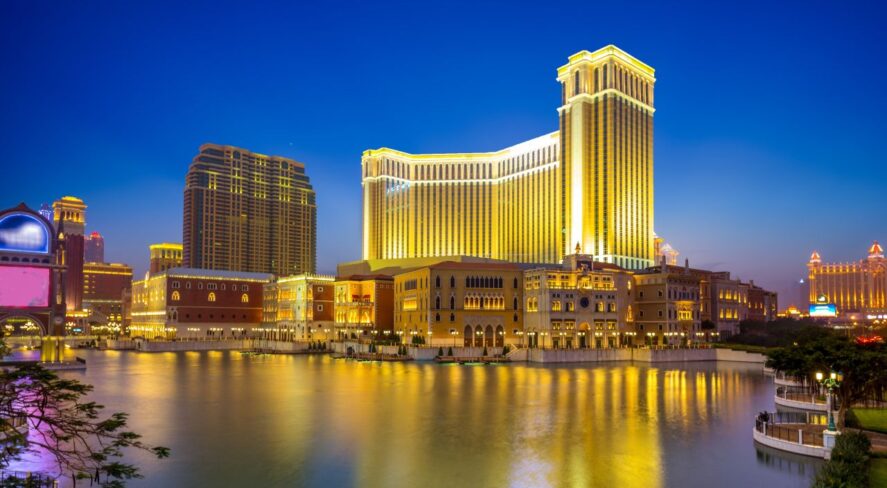
The Security Industry Association’s recent Vertical Insights Lodging and Casino Security Symposium brought together three industry experts to tackle one of the most complex security challenges in the private sector: protecting hospitality environments that are, by their very nature, designed to be open.
Sponsored by HID Global and hosted by SIA Manager of Industry Relations Courtney Kay, the webinar explored how hospitality and gaming organizations are modernizing security while preserving guest experience and featured perspectives from a senior Marriott executive, an access control technology specialist and a casino surveillance executive from MGM Resorts. Together, the experts painted a vivid picture of how the industry is evolving—from reactive security models to data-driven, integrated and increasingly automated systems. Here are key themes and takeaways from the event.
VIDEO: Vertical Insights Lodging and Casino Security Symposium
“Built for Access”—The Core Challenge of Hotel Security
The webinar opened with Erik Antons, managing vice president and chief safety and security officer at Marriott International, who oversees security across nearly 10,000 properties worldwide. Antons shared a frank assessment of why hospitality is uniquely exposed.
“Hotels are designed for access,” Antons explained. “Lobbies, restaurants, bars, convention centers, pools, rooftops—they’re all intentionally open to the public.”
That openness, combined with round-the-clock activity and a transient population of guests, creates what Antons called “an extraordinary risk surface that spans cultures, jurisdictions and threat types.”
Antons walked attendees through the full scope of Marriott’s layered security program, which spans operations, intelligence, investigations, crisis management and physical security design. A mature global security program, he noted, looks essentially the same across industries—but hospitality adds unique layers of complexity, including managing 38 different brandsfor threat monitoring; hosting VIPs and government delegations; and employing a large, diverse and often seasonal workforce.
Antons stressed that the mission is to be “strong where it matters, subtle where it counts and always preserving the guest experience.”
Intelligence at Scale
One of the most striking statistics Antons shared was around threat intelligence: Marriott’s Global Security Operations Center (GSOC) receives approximately 150,000 alerts per year—filtered down to just under 3,000 actionable alerts sent out to properties in 2025. The GSOC maintains one-mile geofences around every Marriott property worldwide, capturing and categorizing any threat that enters that perimeter.
“The core question we always try to ask is, are alerts actionable? Is it meaningful? If they don’t change posture, staffing or guest communication, they’re probably noise,” said Antons, who also highlighted Marriott’s crisis management philosophy—one that devotes roughly 60% of resources to prevention and preparation rather than response. The framework follows five stages: Anticipate, Prepare, Prevent, Respond and Recover.
“The more we can deal with things on the front end,” he said, “the less we have to worry about on the back end.”
Mobile Access Control: Replacing Plastic With Trust
The second presentation came from Phil Coppola, business development director, mobile solutions, PACS North America at HID, who delivered a deep dive into the shift from physical access cards to mobile-based identity credentials. Coppola’s core argument was direct: the traditional plastic card model is built on assumptions, while mobile digital identity is built on trust.
Coppola described the conventional credentialing process—a new hire visits a card office, gets photographed, has a card encoded and walks away—as deceptively fragile.
“That is the last point at which we know that when we hand that card to that staff member, they are the ones with the card,” said Coppola. “After that, everything else is an assumption.”
Lost cards, shared credentials and delayed revocations all represent security gaps that are especially pronounced in large-scale hospitality operations. One facility Coppola referenced had 20,000 to 30,000 seasonal cardholders cycling through a physical badge office each year.
Mobile credentials flip this model. A new hire can be provisioned entirely remotely— before their first shift, from home, via a secure link to their phone or smartwatch. When an employee departs, their credential can be revoked instantly and remotely.
“There is no chance of them coming back with a card that looks like they belong,” said Coppola, who also made a strong pitch for IT department involvement, observing that physical and cyber security have historically operated as parallel silos.
“Why are we protecting people in 2026 with 15-year-old access control hardware?” asked Coppola, who compared the average age of deployed access control hardware to “allowing you to use ‘password’ as your password.”
Bringing IT into the conversation, he argued, accelerates modernization and unlocks automation that frees security staff up to focus on higher-stakes incidents.
Beyond Cameras: LiDAR and Sensor-Driven Analytics
The final presentation came from Eddy Collier, executive director of surveillance technology at MGM Resorts International, who offered a fascinating look at how light detection and ranging (LiDAR) technology is expanding the role of security beyond loss prevention and response. Unlike traditional cameras, LiDAR uses lasers to detect and track movement with anonymized data—making it effective in low light, smoke or crowded environments while supporting privacy and compliance.
“The anonymized data point is really big for us,” Collier said. “It’s not a camera—we’re not identifying exactly who you are until you pass through a camera. And then we couple those two data streams together.”
MGM is deploying LiDAR sensors ranging from 30 to 400 meters to accomplish things traditional cameras struggle with—including seamless cross-camera tracking, anomaly detection and virtual fencing in areas with limited camera coverage. In one demo, Collier showed how a person running through a casino floor immediately receives a “red halo” designation in the LiDAR dashboard, which follows the individual until security can assess and respond.
The business applications extend well beyond security. Collier described how LiDAR data revealed that certain slot machines were placed in poor locations—guests were sitting at them not to play, but simply to wait for friends near elevator banks. That kind of behavioral insight, previously invisible, is now surfaced automatically.
“Our goal here is not just for security to keep you safer in our casino environments, but to hopefully better your experience—bring those wait times down.”
Collier also addressed practical challenges candidly: LiDAR is bandwidth intensive and expensive and requires thoughtful infrastructure planning. His advice was to invest in cable infrastructure built to last, so that sensors can be swapped or upgraded without major overhauls.
“Even if I want to change it tomorrow, I can just replace it,” he said. “But you have to get the infrastructure in place.”
A Unified Vision for the Future
Across all three presentations, one message was clear: effective lodging and casino security today requires strategic planning, risk management and integration—between physical and cyber systems, security and IT teams and protection and guest experience.
Together, these insights offer a roadmap for hospitality and gaming organizations looking to modernize security, reduce risk and build resilience in an increasingly complex world.
Want even more on this topic? You can watch the full symposium here.
In creating this blog, content from the Vertical Insights Lodging and Casino Security Symposium was summarized using multiple large language models and reviewed by human editors.
 Back to Top