
The Role of Locked Doors and Access Control in School-Based Active Shooter Events
About the Research
School-based active shooter incidents, though statistically rare, remain among the most
consequential forms of targeted violence in the United States. Door locks and access-control
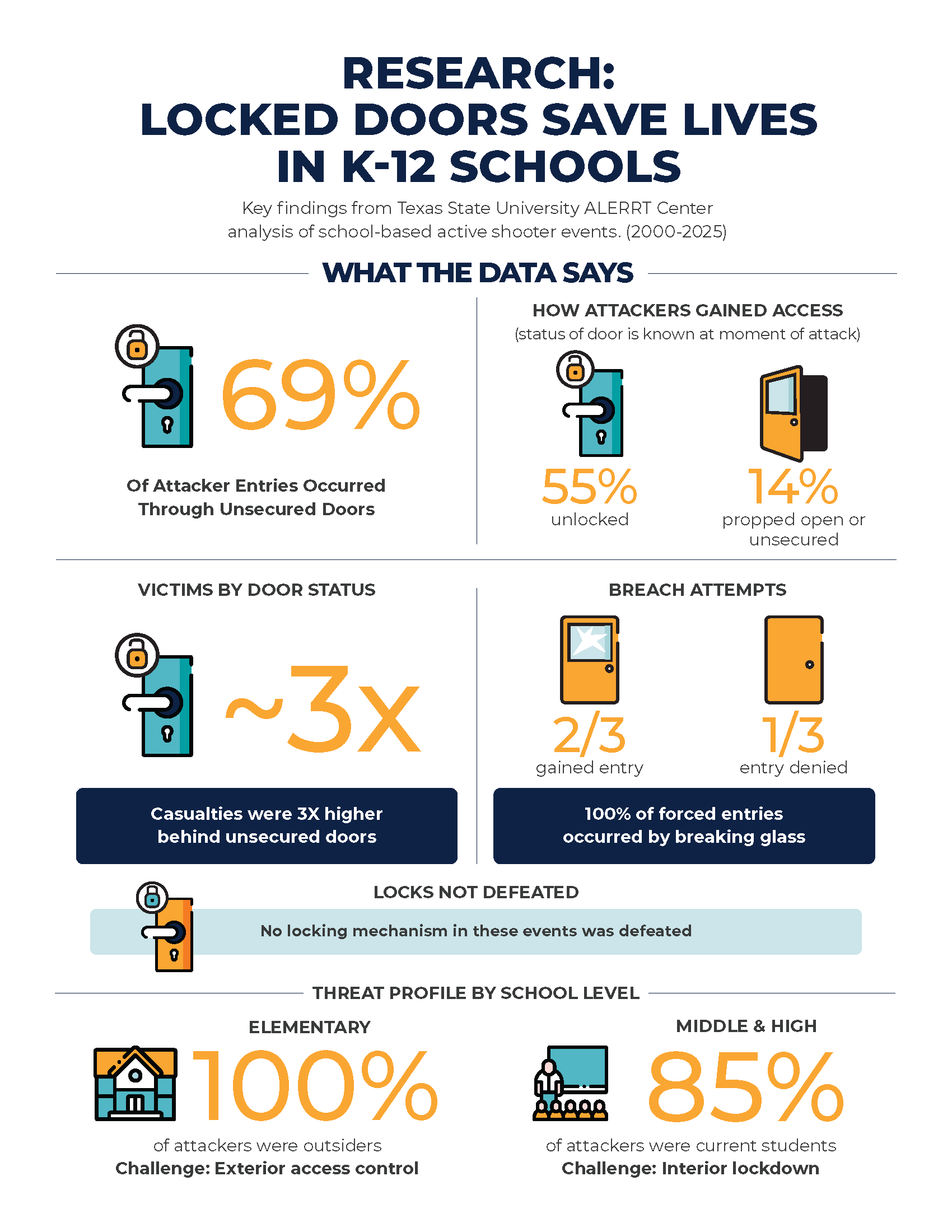
measures are routinely cited in guidance documents, scholarly manuscripts and after-action reports as central to school safety strategy, yet systematic evidence on how these measures function during real-world incidents has remained limited.
This study, produced by the Advanced Law Enforcement Rapid Response Training (ALERRT) Center at Texas State University and supported by a grant from the Security Industry Association Endowment Program, examines the role of door locks and related physical security features in school-based active shooter events.
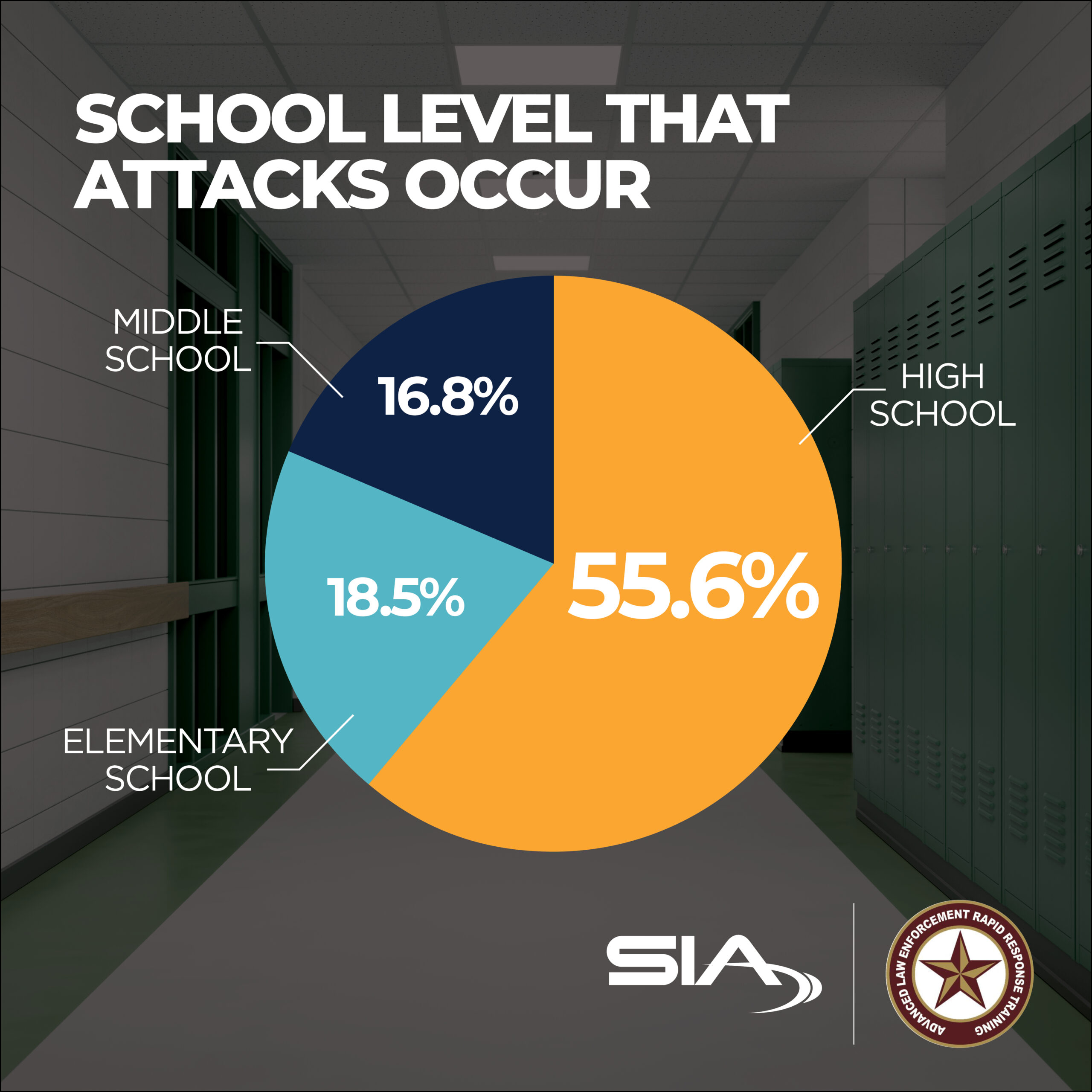
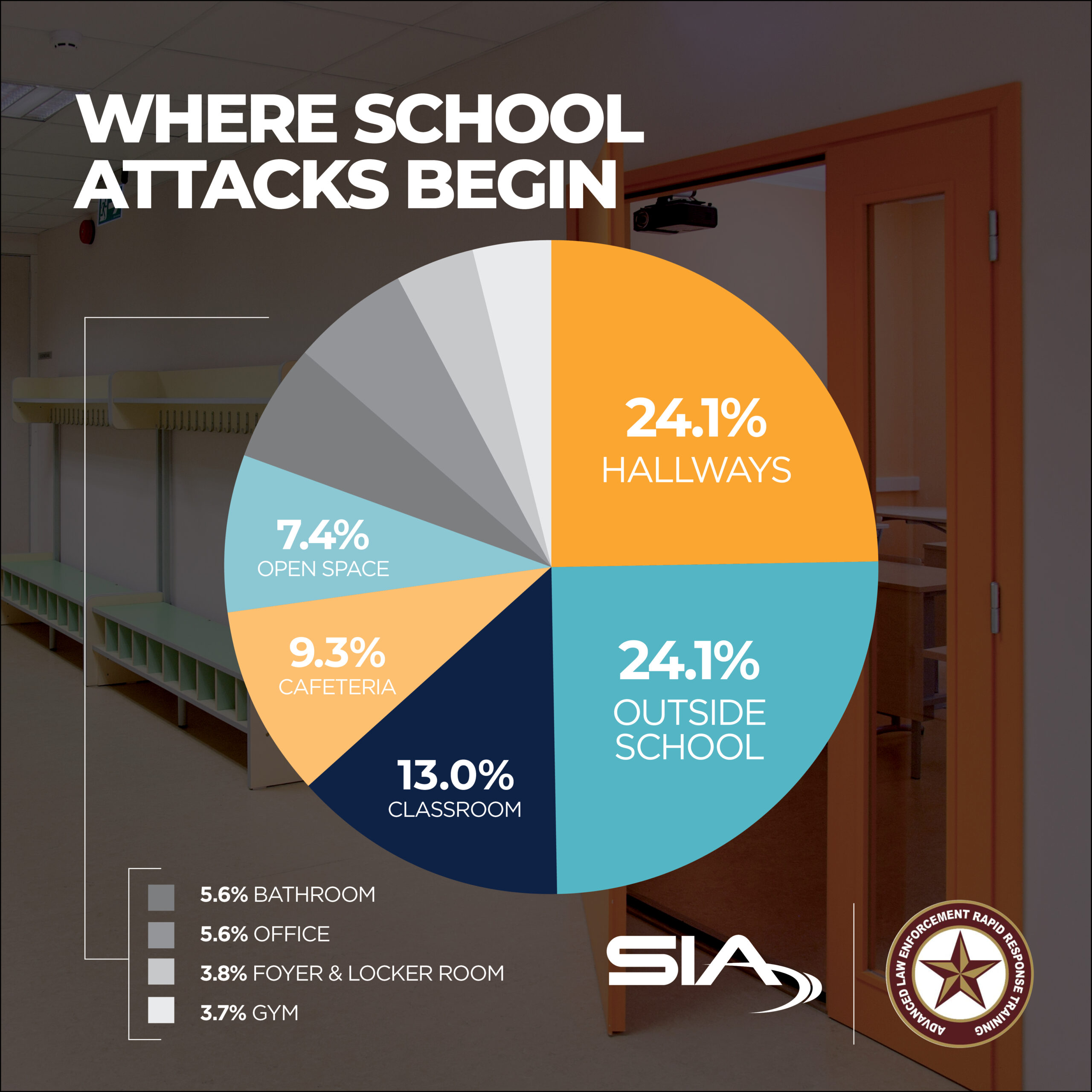
The analysis centers on K–12 school settings in the United States between 2000 and 2025. Two categories of incidents are examined: completed school-based active shooter events identified under the Federal Bureau of Investigation’s active shooter definition, and incidents in which a potential attack was averted or delayed by locked doors or other physical security measures. Data were drawn from public records requests, law enforcement after-action reports, media coverage, and, where available, direct communication with affected schools and agencies.
 Back to Top