
A Legacy of Security: A Mother–Daughter Story in the Industry
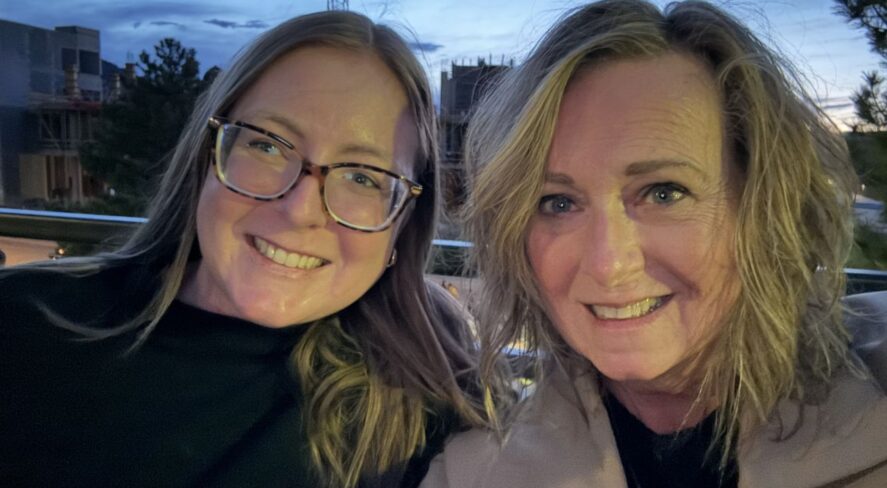
In celebration of Mother’s Day 2026, the Security Industry Association (SIA) Women in Security Forum is proud to spotlight the unique stories of mothers and daughters who have both built careers in the security industry. These stories highlight not only the evolution of the field, but also the powerful influence of mentorship, representation and shared passion across generations.
In this feature, we speak with Elizabeth Lenox and her daughter, Shannon Tracey, of Allegion, a dynamic duo whose careers reflect both the history and the future of security. From life safety advocacy to early career mentorship, their journeys offer insight into how the industry has changed and where it’s headed.
SIA: Tell us about your career story and how you got into the security industry.
Elizabeth Lenox: Hi, my name is Liz Lenox, and I’ve worked for Allegion (formerly Ingersoll Rand) since 2001. I made huge life decision to leave a job I was unhappy in right after 9/11. Working in New York City at the time and witnessing the tragedy that unfolded that day gave me the push I needed to be brave enough to leave my job and start over.
At the time, Shannon was in middle school and my son was in grade school—so changing careers as a single mother was pretty bold. And it turned out to be the best decision I ever made. I started working for Allegion in December 2001. My passion was to educate the design teams that I worked with on the balance between life safety and security. Knowing that doors remained locked in the towers as people tried to escape stayed with me, and I made it my personal mission to ensure that I could hold my own in a discussion regarding this balance between keeping people and property safe and ensuring they could escape should a situation require it.
I started out as a specification consultant calling on architects and preparing door hardware specifications. I progressed into a leadership role, and eventually I left New York in 2018 to move to Denver, Colorado, where I still reside. I am currently Allegion’s program director for mission-critical design services, and my team works with design teams and security consultants—as well as end users—on data center projects across the United States. We have a huge amount of experience in this vertical market as we round out year three of this team’s existence in our organization.
Shannon Tracey: My name is Shannon Tracey. I have been in the security industry for nearly 10 years. I started with Allegion in 2016 through the Specification Writer Apprentice Program working out of the Colorado office. My favorite projects to work on were school renovations. I loved helping local school districts update their hardware to meet current day security needs, plus working within the existing conditions added an extra challenge.
In recent years, I have transitioned to a teaching role within Allegion (director, specification consultant development), where I help support the early career programs and continuing education for the specification team. In my personal life, I love spending time outside with my dog or working on new craft projects. I also dedicate a lot of time to reading, reviewing and collecting books, as well as volunteering part time at a nonprofit used bookstore that supports our local library system.
SIA: Did you always imagine your daughter following you into this industry?
EL: I did not! This is actually kind of funny because I’m pretty sure she thought there was no way she’d ever work for the same company as me. In fact, I remember going on college tours with her and pointing out Allegion door hardware on some doors, and she was not impressed and in fact thought I was pretty embarrassing.
SIA: Did you always see yourself here?
ST: Definitely not! I honestly did not understand what my mom did for work until I was in the industry myself—I just knew she worked with doors. It was not until I graduated from college and started job hunting that I started considering a career in the industry. Allegion has an early career program for door hardware specification writers, and that felt like the perfect way to get my foot in the door. Now I’m approaching my 10-year anniversary of joining the industry, and I can’t imagine myself anywhere else.
What’s one habit or piece of advice from Mom that you use every single day on the job?
ST: I think the habit I learned from my mom that I try to use every day is her work ethic—not the most creative answer, but anyone who knows her would understand. She is one of those people who actually loves their job—when she is working on something complex, she throws herself into it and won’t stop until she finds a solution. Even in our personal lives, if there is work to be done or a problem to solve, she will always be the first one to help.
Is it the one thing you hoped she’d remember?
EL: I think this is a great habit to be recognized for! And she’s not wrong. I am a problem solver by nature, and the more complicated, the better. It’s honestly one of the things that keeps me going—I get bored if I don’t have something complicated to work through.
Have you two ever disagreed on a security call—literally or figuratively—and how did you resolve it?
ST: I can’t think of any situations where we have disagreed on a security call at work—we both tend to approach things very logically.
EL: I also cannot think of an example. We may have different opinions about how to solve a problem, but I think we can brainstorm solutions instead of disagree.
If you had to describe each other’s leadership style using only security industry jargon, what would you say?
ST: I would describe my mom’s leadership style as the credential reader on an electrified opening. She is always there making sure things work as they should, but not in the spotlight. The electrified hardware gets all the credit for unlocking the door, but it needs to be managed by a credential reader. We don’t always notice the credential reader off to the side of the door, but it is doing a lot behind the scenes to support the electrified hardware in doing what it does best.
Elizabeth: This is a bit of a tough one to answer. I think Shannon is a great leader to her students, and I can’t think of a way to describe that as asked.
The security industry has historically been male dominated. How has that reality shaped your individual journeys differently, given the generational gap between you?
ST: It has been interesting even in my relatively short career to see how things are slowly changing. I remember in my early days in the industry, it was not unusual to be one of the only women in the room. I’m sure my mom was often the only woman in many rooms. Now I’m in a lot of rooms where more women not only have a seat at the table, but are in leadership positions innovating the industry. I think there is still work to be done—the industry is still very much male dominated, but we are making progress.
EL: When I started out, this was definitely the case. I remember one of my first managers saying something like, “You don’t seem to fit the prototype of a specification consultant,” and I wasn’t quite sure how to take that. He had alluded not only to it being a male-dominated industry, but also that many of the folks who did the job that I did at the time preferred to work from home and not really engage with the outside world—sort of put their heads down and do what was asked. I was always more of a people person—especially when I felt I could help them solve their (door hardware) problems. I would go in person to meet with architects and security consultants. I would offer to do some door hardware training for the security consultants that I worked closely with—since this seems to be a huge gap for them. I think we all prefer to understand what it is we are trying to achieve, and the more I knew about what they needed from me, the more I was able to do my job more efficiently and effectively. I definitely see the shift with more women in this industry.
What has surprised you most about watching each other navigate this industry?
ST: I think something that has been really cool is getting to see another layer of my mom. It can be hard to view our parents outside the context of them being our parents—we don’t see them the way an outsider would because they are too pivotal to our lives. Working together, I get to see her shine in this whole other environment. Seeing how excellent she is at her job has added a layer of respect and admiration to how I view her.
EL: Honestly, it was tough watching Shannon enter into this industry and go through the struggles we all go through when we are learning something new. I knew that she would end up being exceptional if she only could get through the learning period. And, boy, did she. She was one of the top performers in her regional sales office before she moved on to her current position leading the training program. Her current role is such a great fit for her—she has taken it to a new level in the past three years. I’m not sure that I ever really saw her in her current role to be honest, but she’s so good at it I can’t imagine her not doing what she does.
How has the definition of “safety” evolved between your two generations—both professionally and personally?
ST: I think the biggest evolution around safety is the incorporation of electronics. Electronic solutions and access control seem to define safety today. Most of us probably have apps on our phone where we can control the locks on our front door or view a doorbell camera to see if our package was delivered. This would have sounded like science fiction a few decades ago. Electronic locks have been around for a long time, but to see the rapid progression of utilization by the average person is astonishing.
EL: I’m going to circle back to my purpose and how I got here. Building codes have evolved so much since the early 2000s—most of it with safety in mind. Protection of property and protection of people is paramount. School safety wasn’t even a thought when I was going to school. We just passed the 27th anniversary of Columbine, which was such a tragic event but went on to help drive such positive changes in our industry. Classroom security locks were developed as a direct result of Columbine—right here in Security, Colorado, where Schlage still has a physical presence. When Shannon was younger and she would go out with friends, I’d ask her to always be aware of where the exits are so if something were to happen, she knew how to get out—just to be aware of things like that. When I would sit in meetings and talk about securing an opening, the term “it’s fail safe” would be said when trying to lock an egress door. Fail safe is important, of course—any door that is locked by any means in the egress path must unlock in a fire alarm. But what if someone has a gun? The fire alarm will not go off, and the door will remain locked. I always tried to educate in order to gain alignment on the security and door lock strategy when in meetings like this.
AI and smart surveillance are reshaping everything. Do you find yourselves aligned or on opposite sides of the debate about where the technology is headed?
ST: I think we are very aligned with the big-picture items when it comes to advancing technology. I think it is exciting to imagine some of the ways that artificial intelligence can help support our industry in the future. I especially see value in utilizing AI to create quality assurance/quality control-type processes to catch errors or potential conflicts.
EL: I think I’m fairly tech savvy for my age bracket; however, I’m a bit behind on the AI bandwagon (not intentionally—my schedule is insane, and it’s more of a time constraint to learn new technologies and apply them). I’m open to understanding more about how this technology can help save time and automate tasks.
What does it mean to you to be a woman in the security and surveillance space today?
ST: It means a lot to me to be a woman in this industry—I think it is important to have representation. In my current role, I have the opportunity to mentor a lot of young women new to the industry through an early career program, and my goal is to be an advocate for their success and growth. It can be so intimidating to be new to this industry, and I think joining a male-dominated industry can add even more pressure on women to prove themselves.
EL: I love being a woman in this industry and always have. I don’t care if I don’t fit the mold—I have a lot to offer the design teams that I work with. I’m sure there is a bit of skepticism until they start working with me—and then they realize I know what I am doing and can help solve their door hardware and security problems.
Do you feel the industry looks different now than when your mom started out?
ST: Absolutely. I know that the women of my generation are being lifted up by the work done by the women in the generations before us—they paved the way forward.
If you could co-author one change in the security and surveillance industry—a policy, culture shift or technology standard—what would it be?
ST: This is a tough question! The specification writer in me would love a technology that could be used to assess a project and compile a list of all applicable codes and standards to consider—perhaps even including links to products and solutions that comply with those codes and standards. Our industry is rapidly evolving, and even the most dedicated lifelong learners can struggle to keep up with all the changes.
EL: I also think this is a tough question. I’d say a culture shift I’d like to see happen is that door hardware consultants get more credit for the consulting work that we do versus the categorization as a vendor. Yes, I work for a company that manufactures products—that is true—but we are so much more than that! We are problem solvers and solution engineers—we invest so much of our time managing the process and the project. We don’t submit a specification and walk away—we are there through the entire life cycle of a project and a true partner to the design teams—and owner teams—that we work with. I do feel that we are slowly chipping away at this misconception that we are only trying to specify “our products.” Our primary goal is provide the right solution for the project—regardless of whose name is on the products that we specify for a door opening. Many of the security consultants that we work closely with see the value we bring to the table and advocate for us to be part of all discussions that are physical security related, which is appreciated!
The views and opinions expressed in guest posts and/or profiles are those of the authors or sources and do not necessarily reflect the official policy or position of the Security Industry Association.
 Back to Top