
Mothers, Daughters and the Business of Building Security: Q&A With Christy Miller and Caitlin Brudnicki
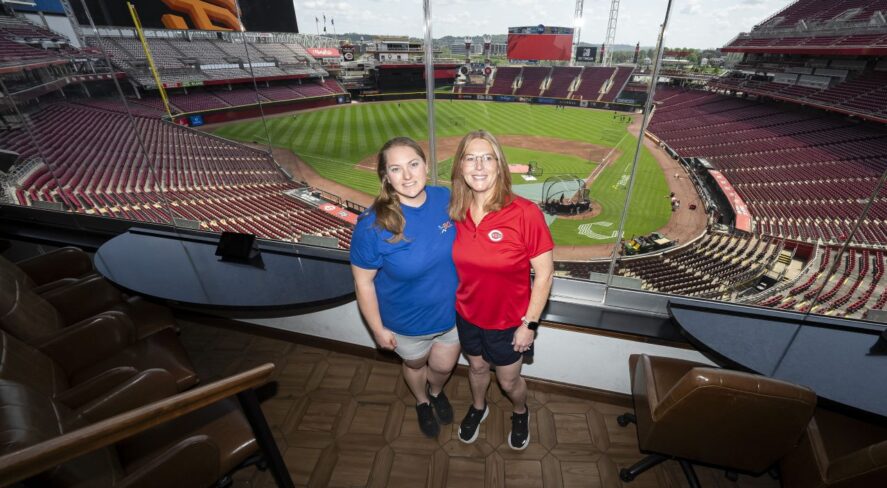
Throughout its May 2026 mother/daughter series, the Security Industry Association (SIA) Women in Security Forum has been sitting down with mothers and daughters who share not just family, but also a job site, a client roster and a stake in where this industry is headed. Each conversation has offered a different window into what it looks like to build a career alongside the woman who raised you, and to do it in a field where not so long ago you might have been the only woman in the room.
This installment features Christy Miller, CEO of BCL Enterprises, and her daughter Caitlin Brudnicki, the firm’s senior designer. Between them they hold four decades of industry experience and a wall’s worth of credentials: RCDD, RTPM, DCDC, Axis Designer and Certified Trainer. Miller is the second-generation owner of a woman-owned firm that’s spent years shaping technology, AV and physical security design, particularly in the K–12 space. Brudnicki came to the industry by way of a late-senior-year pivot and has since built her own name as a designer and a BICSI committee chair.
Their conversation covers familiar terrain for this series, including ego, awareness and male-dominated rooms, and pushes into newer territory: what an enforceable artificial intelligence (AI) surveillance standard should actually look like, how “safety” has expanded from physical to digital to personal and why both of them think the policy conversation around analytics is moving slower than the technology demands.
SIA: Did you always imagine your daughter following you into this industry?

Christy Miller: Honestly, no. Caitlin grew up watching me work in an industry that most kids couldn’t even describe, and she had her own plans: she wanted to be a teacher. She earned her degree in early childhood education and was on her way. It wasn’t until she got close to graduation and realized teaching wasn’t going to be her path that the door opened for us. Because so much of what we do at BCL is technology, AV and physical security design for the K–12 sector, I told her I genuinely thought she’d be a great fit on our side of that world. I offered her a job, fully expecting it might be a stepping stone to something else. Ten years later, watching her become a senior designer with her RCDD, RTPM and Axis Designer credentials, I’m proud, but I won’t pretend I always saw this coming. We found our way there together.
SIA: Did you always see yourself here?
Caitlin Brudnicki: I honestly never thought I would be a part of a family business, let alone follow my mom into the telecom world. As a kid, I couldn’t even accurately describe what my mom did for a living—I only knew that she did some sort of design work for technology in schools. My bachelor’s degree is in early childhood education, and I have a giant passion for teaching, so it came as a shock to me when I was finishing my senior year of college and jumped into the opportunity my mother handed me. Fortunately, there are a lot of parallels between working in school design and education. I value all the lessons that have brought me to where I am now.
SIA: Caitlin, what’s one habit or piece of advice from mom that you use every single day on the job?
CB: There are so many advantageous habits and even more pieces of advice that she has given me over the years. I would say that the ones that stick out the most are the importance and value of networking, confidence and being attentive. Networking has come in the form of being involved in industry organizations (BICSI, AVIXA, NAWIC), as well as taking opportunities to join architecture and engineering summits and conferences and accepting speaking engagements. Confidence and being attentive also stick out, and they go hand in hand with each other. I’m fortunate in the fact that I was raised and mentored by a strong and fiercely intelligent woman. She taught me that no one can challenge my presence in a room if I know I belong there, and it is even better when you make it known that you are there.
SIA: Christy, is it the one you hoped she’d remember?
CM: Yes, and honestly the order she put them in is the order I would have put them in. Networking, confidence and being attentive—those three things are what build a career in this industry. I served on the BICSI board for 10 years, volunteered for 20 and helped contribute to standards, because that’s how you remain a leader instead of just a participant. But underneath all of that is the advice I never wanted to have to give her, which was about awareness. Pay attention to your surroundings. Be professional. Be cautious, especially when you’re on your own at a conference or a job site. In a male-dominated industry, that’s just good practice. Watching her balance all of that—the confidence to walk into any room and the awareness to read it—tells me she didn’t just hear me. She internalized it.
SIA: Have you two ever disagreed on a security call — literally or figuratively — and how did you resolve it?
CB: I think the majority of our disagreements came early on in my career, not necessarily over the substance of the security/design matter, but over the approach. Being so young and in such a large role meant a lot of ego in the beginning for me, and I wouldn’t always approach things with an open mind. Patience played a key role in getting through those days on my mom’s part. She let me get my ideas out and then guided me to see other points of view, which went a long way in teaching me how to really be an effective designer, employee, and professional.
SIA: If you had to describe each other’s leadership style using only security industry jargon, what would you say?
CM: High-resolution, low-latency. She sees the detail before anyone else does, and she responds in real time.
CB: Full coverage, redundant systems, zero single points of failure. She’s built this company to keep running no matter what happens, and that’s the same way she leads.
SIA: The security industry has historically been male-dominated. How has that reality shaped your individual journeys differently, given the generational gap between you?
CM: When I started almost 40 years ago, I was often the only woman in the room—and frequently the only woman on the job site. You learned to be twice as prepared because you didn’t get the benefit of the doubt. I’m the second-generation owner of BCL, and we’re a woman-owned company, which still raises eyebrows in some rooms even now. There were moments early in my career when I had to decide whether to push back or just outwork the doubt, and most of the time I chose to outwork it. That choice shaped me. It taught me to lead from competence rather than from title, and it’s the foundation I tried to pass down to Caitlin.
CB: The security world has come a long way. I have the advantage of having seen these changes in real time. Growing up, I was able to see and hear about some of the challenges my mom faced in her career. While things have improved greatly—there are more women, and it is not as strange to see a woman in a leadership role—there is still a long way to go. It is still common for someone to look for a man to talk with, and there’s a certain level of shock when they realize we know what we are talking about and doing. Selfishly, I enjoy those moments.
SIA: What has surprised you most about watching each other navigate this industry?
CM: How quickly Caitlin built her own credibility. She didn’t lean on being the owner’s daughter—she went the other way and worked harder than anyone to make sure no one could ever say that’s why she was where she was. Watching her earn her RCDD, RTPM and Axis Designer credentials and now chair a BICSI committee—she built her own name in this industry, not mine. What also doesn’t surprise me anymore but still delights me is how genuinely she loves the technical side. We’ll both happily talk tech long after the architects, GCs and construction managers in the room have glazed over. That kind of passion for the work is the thing I most hoped she’d find for herself, and she did.
CB: There is always something new that surprises me in watching my mom navigate the industry. I think the biggest surprise is how much she still gets excited about the little things. It could be a new product, a new design element or even a new “cheat code” for Bluebeam, and she lights up like a kid on Christmas morning. You can teach a lot of things, but you can’t teach that level of passion. Her dedication is also unmatched. After 40 years in the industry, she is still striving for perfection, to be the best of the best, and she holds that expectation for those around her.
SIA: How has the definition of “safety” evolved between your two generations—both professionally and personally?
CM: For me, safety used to be a much more physical concept—site safety, building security, protecting people and assets. Over the years it’s expanded enormously, into data, networks, privacy and increasingly the integrity of the systems themselves. The threat surface has grown, and so has what our customers need from us. And personally, I’ll admit my generation was taught that work supports your lifestyle—you build the career and the rest fits around it. Watching Caitlin’s generation reframe that conversation around work-life balance and sustainability has been good for me, honestly. Both views have something to teach.
CB: Safety is a much broader term for my generation, I think. It encompasses not only the physical side, but also the cyber and personal concepts as well. Our world is a very different place now—mass shootings and security threats are no longer out of the ordinary events. A lot of that plays a part in how my generation values the personal side of security (work-life balance, mental health, flexibility). Security is still a greatly evolving topic, and I really think we are still at the surface of it.
SIA: AI and smart surveillance are reshaping everything. Do you find yourselves aligned or on opposite sides of the debate about where the technology is headed?
Both: Aligned, actually. We’ve both embraced AI and use it daily in our work—for design support, documentation, research, communication. We see it as a tool that makes good designers more productive, not as a replacement for technical judgment. Where we both get cautious is on the surveillance side. The technology is moving faster than the policy and ethics conversations around it. Just because a camera can do something doesn’t mean it should. That’s a conversation our industry has to lead, not follow.
SIA: What does it mean to you to be a woman in the security and surveillance space today?
CM: It means I have a responsibility to the women coming up behind me—including my own daughter, but also every young woman who walks into a BICSI event or onto a job site and looks around for someone who looks like her. I take that seriously. Caitlin and I are both committed to bringing more women into this industry, and we encourage participation from other women every chance we get—through mentorship, sponsoring someone for a certification or just making sure their voice gets heard in a room where they’re outnumbered. Being a woman-owned company in this industry isn’t a marketing line—it’s a commitment to keep the door open and to make sure the women who walk through it have someone holding it for them, the way I wish someone had been holding it for me 40 years ago.
SIA: Caitlin, do you feel the industry looks different now than when your mom started out?
CB: The industry looks different now than it did when my mom entered the workforce, certainly. A lot of that is thanks to strong women, like my mom, who fought to be a credible source in the room. There is still a lot of work to be done to get more women in the industry. I hear from a lot of the women that have been in the industry that we are a special breed. We don’t get scared easily, and our bite is bigger than our bark. You really must be confident to have a career in this industry, and you have to be willing to lean on your connections. This also means supporting and building other women up instead of tearing them down. We don’t have to be the only women in the room, and we should be encouraging others to join us.
If you could co-author one change in the security and surveillance industry — a policy, a culture shift, or a technology standard—what would it be?
CM: A real, enforceable standard around AI and analytics in surveillance systems—covering data retention, algorithmic transparency and end-user consent. The technology is being deployed faster than the rules around it are being written, and that’s a gap our industry needs to close before it’s closed for us by regulators who don’t understand the work. We’d rather help write that standard than have it written about us. And honestly, I’d love to do that work alongside Caitlin’s idea for K–12, because they connect—the schools she designs for are exactly the environments where these AI questions matter most.
CB: I’d love to help generate an educational security standard and policy for schools. Spending my career as the K–12 designer for our firm, I hear so many differing views on physical security, but after our design is complete and a building is constructed, the policies and actual practices override the intended functions of security systems. I would love to create a policy guideline on implementing and maintaining security systems to function as intended for the overall protection of those within the building.
The views and opinions expressed in guest posts and/or profiles are those of the authors or sources and do not necessarily reflect the official policy or position of the Security Industry Association.
 Back to Top