
The Future of Federal Identity: Insights From the 2026 SIA GovSummit
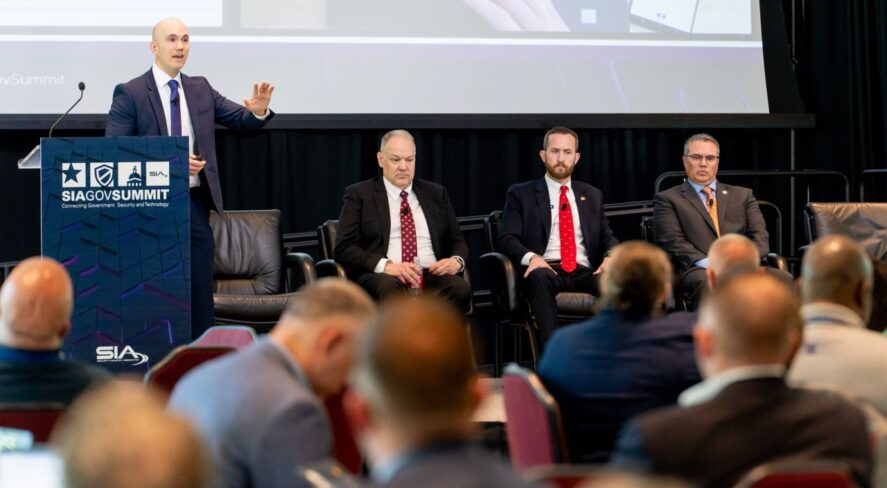
Experts from HID, CyberArmed and BruckEdwards shared updates on personal identity verification standard compliance, mobile benefits, deployment models and more.
Does your company do business with the federal government? At SIA’s 2026 GovSummit conference, a panel of experts in federal identity examined the evolution of Federal Information Processing Standard (FIPS) 201 identity models to support today’s digital-first environments.
As agencies balance security, compliance and user experience, trusted personal identity verification data models can extend securely into mobile ecosystems—while preserving public key infrastructure integrity, certificate validation and National Institute of Standards and Technology-aligned assurance levels. Panelists examined hybrid card-and-mobile approaches, governance considerations and life-cycle management of credentials in a digitally connected environment.
The Future of PIV: More Precise, More Agile, More Secure
The National Institute of Standards and Technology’s digital identity guidelines (Special Publication 800-63) outline three pillars for credentialing using FIPS-201 identity management:
- Process, happening at the identity assurance level (sponsors, adjudicators and registrars)
- Technology at the authenticator assurance level (biometrics, smart cards and cryptography)
- Federation, happening at the federation assurance level (Public Key Infrastructure, Federal Bridge)
Roger Roehr, PACS subject-matter expert at BruckEdwards, emphasized that digital personal identity verification (PIV) is “what the new workforce expects.”
Roehr highlighted digital PIV’s ability to support biometric on-card comparison, the faster key rotations and more processing power that may result from post-quantum encryption and digital PIV’s ability to provide non-PIV holders with credentials for visitor or temporary access, with a “pathway for full interoperability and possible federation.”
Why Digital PIV?
According to Greg Abrenio, director of CyberArmed, digital PIV “removes the barriers to use cases you’ve wanted for years,” meaning non-PIV-eligible workers would be able to access areas without delay, personnel cold be extended secure access to remote sites with no reader infrastructure and “dynamic credentials keep your team on mission, not in the badging office.”
Abrenio emphasized the industry and government’s desire to be able to optimize visitor management without bogging down management and “provide the right level of access control at every door,” sharing how digital PIVs can interact with traditional readers to open doors, be used in lieu of a smart badge and provide access control with minimal infrastructure. Other highlighted benefits included:
- Increased security from encryption eliminate eavesdropping and cloning risks
- Alignment with proven standards—NIST SP 800-63-4, the SIA Open Supervised Device Protocol, the Verifiable Credentials Data Model and the new Aliro mobile protocol
- Convenience resulting from the credential moving to mobile devices people carry with them every day
- Built-in support from many existing readers
Abrenio touted digital PIV’s ability to offer “access control with minimal infrastructure” and “take FIPS to the next level” through use of existing PIV infrastructure, improved security and new potential access control capabilities.
What It Means for the Security Industry
Panelists closed by sharing how the industry can get involved and move forward in federal identity. Abrenio noted that the digital PIV “gives you more speed to be more adaptable and address the risks that are changing minute by minute.”
Roehr urged security industry professionals to comment on NIST standards and share feedback on the changes they would like to see in future versions—for example, looking at requirements and considering whether they are “novel, transformational or dogma.”
“As an industry, we’ve fallen back and said, ‘let’s let NIST tell us what to do,’ instead of creating something and showing it to NIST to get them to pay attention to it,” he said.
Learn more about SIA’s advocacy and government relations resources and activities here.
 Back to Top