
Stop Being the Best-Kept Secret: Rules for Being Seen in the Workplace
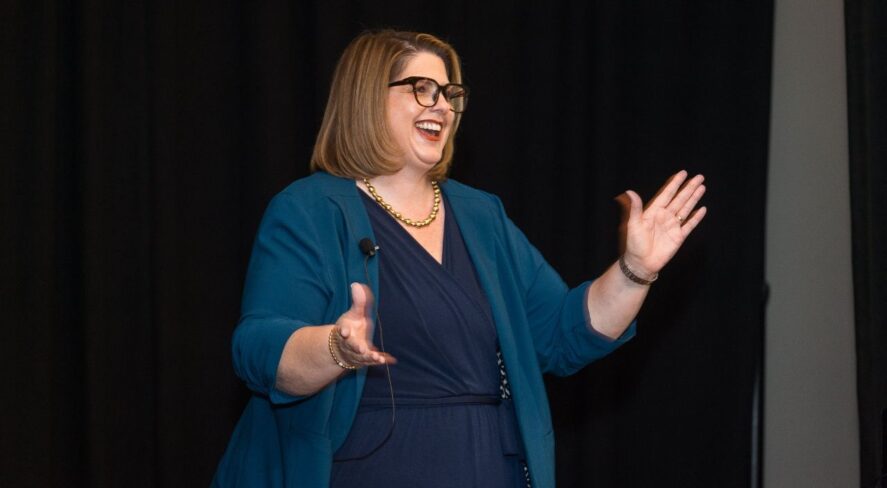
At Security LeadHER 2026, Kathy Sizemore of A-Bell Alarms Company shared how to get recognized in rooms that weren’t built for women, without faking who you are.
The Security Industry Association (SIA) and ASIS International recently closed out a successful fourth annual Security LeadHER conference, an event dedicated to advancing, connecting and empowering women in the security event. This year’s conference gathered more than 500 security professionals from 40 U.S. states and 11 countries in Minneapolis, Minnesota, June 15–16 for two days of connection, learning and community impact.
Among the highlights of this year’s conference program was a talk from Kathy Sizemore, CEO of A-Bell Alarms Company, about women’s visibility in the workplace.
“How many of you have watched someone with half your experience and twice your visibility get the opportunity you deserved? Me too,” said Sizemore, who examined the visibility problem and shared key strategies for women to get seen and celebrated for their accomplishments.
Here are the top takeaways:
Barriers to Women’s Visibility in the Security Workforce
- The socialization anchor: From birth, boys and girls are socialized differently in key ways that can impact how they perform in the workplace. Boys are encouraged to take risks, speak up and fail forward, with the internal script “I can figure it out,” while girls are often encouraged to be careful, prepared and correct, thinking, “I need to be ready first,” before taking action.
- Internal barriers: Sizemore broke down harmful ideas that women may have that keep them invisible in the workplace. Some of us tell ourselves, “I’ll wait until I’m ready,” instead of taking a risk, but Sizemore encouraged attendees, saying “You’ve been ready!” Additionally, women may think their work should speak for itself, but only those in the room will see the work, so it takes more effort to be seen across the organization. Sizemore emphasized that women in the workplace might not want to brag but reinforced that “being known isn’t bragging.
- The qualification gap: When applying for jobs, Sizemore said, women wait until they meet 100% of the qualifications on the job description, whereas men raise their hands if they have 60% of them. She encouraged attendees not to say, “I don’t have the credential” when “the prompt doesn’t ask.”
- Persistent barriers and biases in the security industry: Despite the pride women feel in their work, the SIA Women in Security Forum’s 2025 study on career perceptions found a persistent gender imbalance in leadership and cultural challenges across the industry. 81% of respondents said there is a “good old boys’ culture” that disadvantages women. 91% believe women must work harder than men to achieve the same promotions. And one-third of women in security are likely to look for a new job in the next year.
“The shift isn’t learning a new tactic,” said Sizemore. “The shift is deciding that other people don’t get to tell you whether you’re visible. That’s your call.”
The Visibility Trifecta
Sizemore shared three channels for gaining visibility in the workplace, encouraging women to pick the one that fits best and start there on their visibility journey.
- Strategic networking—Become known in rooms that matter. Start by identifying five people who should know your name and your work—and don’t yet. These individuals could be decision-makers, committee chairs, editors, peers and/or conference speakers you admire. Get in the right rooms. Follow up with people you meet and connect with—share photos and tag them on LinkedIn. “Be a giver—no strings,” said Sizemore, encouraging people to lead with what they can offer when reaching out to a new connection.
- Thought leadership—Start where you are. It builds. Look for opportunities for thought leadership on any level—this could include participating in a local chamber or commerce workshop, speaking at a regional industry event or national conference or writing an article.
- Industry involvement—Become part of the infrastructure. Sizemore encouraged attendees to join committees, associations or standards boards and participate in industry conferences. “Know your value. Find the right tables. When one stops being that, fold it up and move,” she said.
The Action Plan
“Visibility is not a personality trait—it’s a practice,” said Sizemore, who shared a framework for increasing visibility in 30, 60 and 90 days.
Days 1–30: Claim It
- Run your experience inventory. Using an AI agent, insert a prompt listing all your professional experience, volunteer roles, projects, certifications, training, leadership positions and accomplishments. Ask the AI to take what you list and show you what it actually represents—key categories of professional expertise, ways to strengthen how you frame your accomplishments and a 90-second introduction like what could be used to present you to a room full of security industry leaders.
- Create a “known for” statement. Write down something specific answering the prompt “I want to be known as the person in this industry who _________.” Say it out loud to those around you!
- Reach out to two of “your five.” Contact two of the five people you identified who don’t know you but should in the industry.
- Update your LinkedIn profile.
- Join one committee or association.
Days 31–60: Build It
- Write or publish one thing.
- Attend one event with intention.
- Follow up with “your five.”
- Share something useful with a professional contact—with no strings!
Days 61–90: Sustain It
- Reflect on whether the right people now know your name.
- Add five more people to your list of contacts to reach out to.
- Submit for something—a speaking opportunity, an article, an award or some other recognition.
- Tell someone what you’ve done—out loud.
“Security is about keeping people safe—and women understand what it means to not feel safe,” said Sizemore. “This industry needs us in it, but it can’t benefit from what we know if nobody knows we’re here. You’ve done the work. You’ve earned it. Now go make them say your name.”
See more highlights from Security LeadHER here.
Security LeadHER 2027 will be held June June 14–15 in Austin, Texas. For more information and updates on Security LeadHER, please visit https://securityleadher.org.
 Back to Top