
Fundamental Aspects of Perimeter Security Barriers
DOWNLOAD PDF REPORT
Updated in June 2026!
Produced by the SIA Perimeter Security Subcommittee
The SIA Perimeter Security Subcommittee guides the Security Industry Association’s (SIA’s) support for nationwide and international efforts to prevent hostile vehicle attacks. From crowded public spaces or critical infrastructure sites to government facilities, the subcommittee works to identify best practices, assess current threats and solutions and provide stakeholders with the latest on safety and security standards from governments and industry.
Introduction
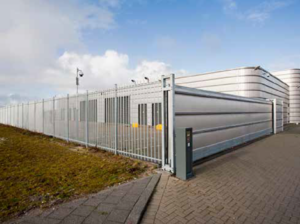 The purpose of this document is to establish a security industry design guidance that enables customers, end users, A&Es, consultants, designers, and other interested parties to more effectively describe perimeter security systems, particularly fence products, hereinafter referred to as perimeter security barriers (PSB). This document also seeks to increase awareness of performance criteria for perimeter security barriers, and encourage industry professionals to market and install these products with these considerations in mind to meet the expectations of an end user.
For example, the term “anti-climb” has become a common product specification point and marketing reference used within the fencing industry as an indicator of higher security. Yet no fence is truly anti-climb to an attacker with the right tools or tactics.
It is a perimeter security barrier’s characteristics and performance criteria, therefore, that define how well a fence can prevent a breach. Adding height, toppers (razor coil/barbwire/spikes), or curving the top of a welded mesh fence can make a climbing breach difficult for an unprepared assailant. Yet these would be less effective in defeating a planned attack by an intruder who introduces a simple tool like a screwdriver into the tight openings of a welded mesh fence with “anti-climb” spacing to use as a climbing aid.
This guide will assist end users in :
- Accurately identifying security
- Defining potential threats and identifying how these would affect the likelihood of breach of a perimeter security barrier. This includes the presence and capability of the actor.
- Understanding fencing characteristics and appropriately defining the functional requirements for these perimeter security products.
What Are Perimeter Security Barriers?

Perimeter Security Barrier (PSB): A fence, wall, railing, planting, or other strategically placed obstructions intended to mark a boundary, control access, or prevent escape.
Passive Fence System: The parts of the fence that have few or no moving parts. As an example, some spinners (rota spikes) are moving parts, but function only within an immediate plane or field.
Active Fence System: Any part of the fence that moves significantly, out of plane, or function.
- Generally identifiable as a Point of Entry or Exit of the secured
- Most often accommodated by a sliding, swinging or lifting gate
- Exposure created by moving
Threat Vectors to Consider for Perimeter Security
Threat vector is a term used to describe the various methods or pathways through which a malicious actor can gain access to a system, network, or physical asset. This could include physical access, cyber-attacks, social engineering, or any other means by which a human attacker can gain entry.
Human physical capability: is defined by ability to functionally lift, push, climb, operate tools or use one’s body in an attempted breach. While the Centers for Disease Control and Prevention (CDC) defines human physical capability using objective measures such as strength measurement, speed and balance, from an attack perspective, this characteristic also encompasses learned experience, gained knowledge of a site’s perimeter security barriers and other protective technologies, and/or the tools an attacker has available for use.
The following are potential threat vectors that can be employed to attack a PSB and elements to consider when determining product solutions.
Human beings: Individuals or groups on foot making a deliberate attempt to breach a PSB. This can be accomplished by the following methods:
- Scaling/climbing: The ability of a person to breach the PSB physically by propelling their body over said PSB.
- Fingerhold: The ability of an individual to grasp a protrusion or insert a finger through any component of the PSB.
- Foothold: The ability of an individual to place one foot or toe upon a protrusion or insert it through any component of the PSB.
- Tool assist: Using a tool or material of any sort to help climb or scaling.
- Bridging, vaulting or repelling: Using a tool or equipment to breach the height of the fence, sometimes without making contact.
- Perch points: Any point on the perimeter security barrier that allows an individual to stop climbing and rest; possible for either surveillance or attack.
- Cutting: Using mechanical, chemical, flame, or natural means to degrade, destroy, or remove any part or parts of the PSB to obtain entry to site.
- Tunneling: Removing earth, or other substrate from beneath the PSB to obtain entry to site.
- Knowledge/experience: Sophisticated attackers with exceptional knowledge of the site, perimeter security barrier types being used and/or those with experience in breaching a certain perimeter security barrier type should be a consideration when choosing perimeter security barrier solutions.
Animals/Insects: Different geographies have different potential threats from native animals and pests. Their entry into a facility can be harmful to critical infrastructure or simply pose a nuisance for maintenance and usage.
- Prevention is accomplished by the deployment of a physical security measure that involves blocking access to areas of a building or property that may be attractive to specific animals or insects. This can include sealing off entry points, such as cracks and crevices, and installing barriers, such as screens, fences, and netting, to prevent animals or pests from entering or leaving the area. It may also include electronic devices to detect or Potential consultation with an expert familiar with specific animal or pest behavior and tendencies may be merited.
Vehicular Breach or Vehicle Ramming:
- Perimeter security barriers can be a platform for Hostile Vehicle Mitigation (HVM). These are systems designed to detect, identify, and mitigate the threat of vehicles being used as weapons against people or property. They are typically composed of physical barriers, sensors, and other security measures that can detect, stop, and redirect a vehicle before it reaches its target. Refer to the most recent established testing requirements for performance in ASTM F2656 and ASTM F3016 for the latest information. Control system requirements are part of the overall security system and requirements should be reviewed and protocols followed in conjunction with the use of the physical product characteristics as described in this document.
Improvised Explosive Devices (IED) and Ballistic Rated Products:
- Ballistics Resistance: Performance characteristic that describes the ability of a perimeter security barrier to withstand penetration from small arms fire, such as handguns, rifles, and Ballistic Resistance is measured by a rating system that indicates the level of protection a barrier provides, such as UL 752 or NIJ 0108.01.
- Blast/Explosive Resistance: Performance characteristic that describes a structure or system’s ability to withstand the effects of an explosive blast, such as shock waves, pressure, and flying debris. Blast resistance is an important consideration in physical security as it can help protect people and property from the devastating effects of a blast.
Natural or Environmental Threats
- Environmental permeability refers to the general effect of time and the elements. Extended exposure to sunlight, heat, cold, moisture and other environmental elements may affect performance or the allowance of waterflow, airflow and other factors that may be necessary for maintenance of adjacent measures. (For example, plantings on one side of an opaque wall may not get enough sunlight for proper growth or development).
- Wind load: Barriers and their structural foundations which are subject to wind must be designed to resist wind load. Product height and opacity will always be affected by wind Wind, whether normal or routine, or catastrophic due to weather anomalies should always be considered. Product engineering needs to incorporate potential extremes based on the geography and geotechnical conditions within which the product is being installed. Building and local codes must be followed for design to resist wind loads.
- Water: Similar to wind, perimeter barriers must be designed to consider any structural loading or potential aggressor access that may be provided by adjacent watercourses. Any perimeter barrier must be designed to convey rainfall and a designated flood level. Rainfall, humidity, floodplain, or secondary exposure from adjacent water masses, can quickly change the dynamic of security or safety provided by these perimeter security barriers. Additional consideration should be given to ensure the mitigation of adverse effects.
Other Considerations: Traffic and Access Control
- Intentional or forced entry: Is a physical security measure designed to make it difficult for an unauthorized person to gain access to a property or It may include the use of locks, alarms, surveillance cameras, and other security measures to deter and detect any attempts at forced entry.
- Passive or casual entry: Is a term used in physical security to refer to measures taken to reduce the likelihood of unauthorized access to a facility or area through means that are not actively guarded or This includes measures such as strong locks, fences, and barriers, as well as lighting, signage, and other deterrents.
- Opportunity of attack: Is a term used to describe the potential for physical security breaches, such as unauthorized access to a facility or the theft of assets. It is the result of inadequate security measures and/or inadequate security awareness.
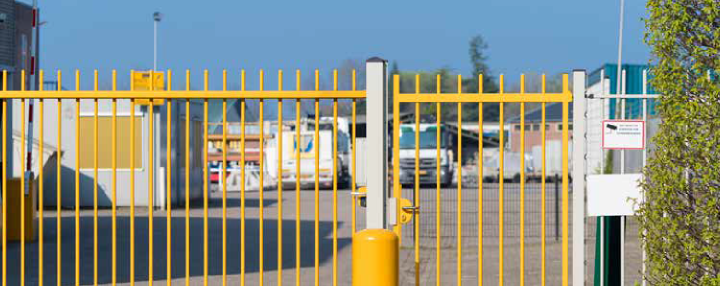
- Vehicular or pedestrian traffic control: Is a physical security measure used to regulate the flow of vehicles and pedestrians in and around a This measure typically involves the use of physical barriers, such as fences, bollards, gates, and guard posts, to control the movement of people and vehicles on the premises. It also includes the use of signage and traffic control devices, such as stop signs and speed bumps, to ensure that people and vehicles are following the rules of the road.
- Boundary Establishment: Is a physical security measure that involves installing physical barriers such as a fence or wall to clearly define the perimeter of an area. This is done as a demarcation to prevent unauthorized access and to provide a visual deterrent.
Functional Value (Cost Value Analysis): Is an approach to physical security that considers the cost of implementing a security measure in relation to the perceived value of the protection it provides. This approach allows security professionals to identify the most cost-effective security measures to implement based on the level of protection they offer.
Perimeter Security Barrier Characteristics and Definitions
The following are defined characteristics that help in defeating the threats in various ways.
Finished height: The distance measured from finished grade to the top of the installed product (including any outriggers).
- The finished height can be composed of various parts – for instance, a fence may be 7’ chain link fabric buried 1’ in the ground with 1’ of barbed wire on top. The finished height for the purposes of the security professional and end user is 7’; as this is the effective above grade resistance the product is providing.
- The higher the barrier/fence finished height, the more challenging it is to climb.
Post: The vertical structural supports of the fence / barrier system.
- Spacing and sizing of posts is critical to manufacture, design and integrity of the installed system
Rails: The horizontal structural supports of the fence/barrier system which provide rigidity.
- Added rails may provide additional rigidity, but also may assist in climbing ability.
- Spacing and placement of rails is critical to final function, design and integrity
Infills: The balance of the perimeter security barrier comprising an array or composition of material to achieve the end product goal.
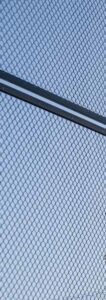
- Chainlink Fence is a series of individual wire strands woven in a helical fashion to create a wire mesh. Its characteristics are defined by:
- Gauge and Type of wire
- Size of the opening created by the wire
- Protective finish coat
- Selvage – how the ends of wire are affixed to prevent unraveling, either knuckled or twisted to create a barb finish, can add to security measures.
- Slats are optional inserts for chain-link fences that can provide added privacy and climb resistance. Slats are often made of plastic or metal.
- Ornamental Steel Fencing utilizes pickets or pales, which are metal shapes used as a vertical infill. Their characteristics are defined by:
- Dimension and shape of profile
- Gauge of metal used
- Spacing and opening widths
- Expanded Metal Fencing is a type of sheet metal which has been cut and stretched to form a regular pattern (often diamond-shaped) of metal mesh-like material. It is defined by:
- Width of slit cut for expansion
- Gauge or thickness of metal sheet
- Finished surfacing either standard or flattened (pressure rolled to provide a smooth, flat surface)
- Welded Mesh Fencing utilizes intersecting horizontal and vertical steel wires that are welded together at each intersection to form a grid pattern and to ensure that the mesh remains fixed and stable. It provides high strength and rigidity, a clear unobstructed view for surveillance purposes, and is available with grid spacing patterns that make it more difficult to cut or climb. It is defined by:
- Gauge or thickness of wires
- Grid and post spacing (determining security level and structural integrity)
- Wooden Board Fencing utilizes various wood species and finish dimensions.
- Be aware of nominal dimensioning for wood products.
- Plastic, composite or other engineered infills can be comprised of many variant base products, providing varying levels of longevity and performance as well as additional layers of security.
Material composition: The type and grade of the material used for manufacture and construction of the perimeter security barrier system. Properties of these products are considered relative to:
- Cutting with mechanical methods such as saws, shears, or other tools
- Bending moments with or without leverage
- Chemo-Thermal resistance (heat, cold or chemical exposure)
- Ballistic resistance
- Blast or high-pressure resistance
- Environmental/corrosion resistance (sunlight, wind, rain, cold, heat)
Foundation requirements: All perimeter security barriers require foundations for structural support. Foundations or attachments to other structures must be engineered according to local, state, or federal code for the site’s specific environmental (wind, seismic) and existing geotechnical conditions. The foundations may consist of any of the following, but are not limited to:
- Concrete foundations, augered or excavated into existing earth
- Post supported, driven posts
- Attachment to existing structure via adhesive or mechanical anchors
- Opportunity for installation on specialty surfaces such as water, rock, ice or other surfaces
- Mow Strips are a foundation option that provides more formidable material beneath the This strip may be composed of either concrete or other aggregate material that mitigate tunneling, erosion from surface drainage, prevent vegetation from growing into the area immediately adjacent to, or onto the perimeter security barrier itself, and provide a clear area along the fence line to facilitate maintenance and site cleanup. Mow strips may be used as an additional perimeter barrier feature – but can not take the place of regular foundations.
The prohibition of conductive electricity is a physical security measure that prevents the unauthorized transfer of electricity through a system. This is usually done by using insulation, such as rubber, plastic or metal, to separate the electrical components of the system from each other and prevent any accidental or deliberate contact between them.
Opacity refers to the level of visibility through the product allowed. This is measured by a percentage of the light or views passing through a perimeter security barrier.
Allowing airflow is a physical security measure that ensures that air can freely circulate to reduce the risk of fire and other safety hazards. It involves maintaining proper ventilation, ensuring that all openings are not blocked, and that all air ducts are clear and unobstructed.
Other obstacles and accouterment products can be placed on the PSB to bolster the security level. These may include:
- Barbed Wire
- Razor Coil or Razor Ribbon
- Anti-Ram/Crash-Rated Cables
- Climb Resistant Spinners
- Spikes (Both stationary and moveable)
- Signage
Access control is a physical security measure that restricts entrance to a property, building, or room to authorized persons. It involves the use of locks, keys, access cards, biometric scans, or other security measures to ensure that only those with the proper credentials can
Lighting/illumination: Perimeter security barriers can be a platform for lighting or illumination to help identify and monitor areas of interest. This can be used to detect intruders, monitor movement, and provide illumination in dark areas. Platforms for lighting can include motion-activated lights, CCTV cameras, and other lighting technology.
Cameras: Perimeter security barriers can be a platform for cameras that consists of a combination of hardware and software components installed for the purpose of monitoring and recording activity in a given area. This system typically includes a network of cameras, a recording device, a viewing station, and a software platform for managing the cameras and recording the footage.
Electronic intrusion detection systems: Perimeter security barriers can be a platform for electronic intrusion detection systems that monitor and detect unauthorized access to a physical space or facility. These typically include sensors, cameras and other security devices that are connected to a central control system, which then sends out alerts to personnel when an intrusion is detected.
Appearance or Aesthetic Value refers to the visual appeal of a physical security system. It is important to consider aesthetic value when designing a security plan, as it can influence the effectiveness of the security system, as well as the overall look of the premises.
Visual Privacy is a physical security measure that prevents individuals from being observed or recorded without their permission. It is achieved by using physical barriers such as walls, fences, or curtains to block the view of people or cameras. Visual privacy also includes the use of security cameras and other surveillance technology to ensure that only authorized personnel have access to sensitive areas.
Breaking force should be considered as well when looking at overall perimeter security barrier performance. Every system and configuration has a breaking moment where the Kilonewton of force applied to it causes it to bend or break. When reviewing individual components or blending different systems, be sure to review how easily a product may break. For example, adding wood boards to an aluminum track slide gate may add some degree of climb resistance and opacity, but a thin board can easily be broken with a small hammer or other simple tool.
A perimeter security barrier may be deployed as either a Rigid or Flexible Platform to provide an effective layer of security. Most products are installed as a rigid platform. Structurally these will support the infill and provide long-lasting robust security. At times, the preference may be to deploy a flexible platform, one that bends during climb or breach, thus making it more difficult for an attacker to attain or maintain fingerhold, foothold or even grasp the product.
 Conclusion
This introductory guide to perimeter security barriers provides information to facilitate an improved understanding of the characteristics of these products. By identifying potential vulnerabilities and threats that merit consideration when selecting and implementing fencing technology used for perimeter security barriers, this document assists security professionals with ensuring that the perimeter security solutions they select and specify meet the specific functional and protective needs of end-user environments, from residential areas to critical infrastructure.
Although this guide was written as a primer and knowledge base for perimeter security barriers and is not presented as an official standard, SIA encourages and welcomes proposals to advance related initiatives for perimeter security barriers.
More information on how to participate in and propose standards activities can be found here.
 Back to Top