
Your Badge Is More Than a Door Key: Takeaways From SIA’s Corporate ID Credential Design Webinar
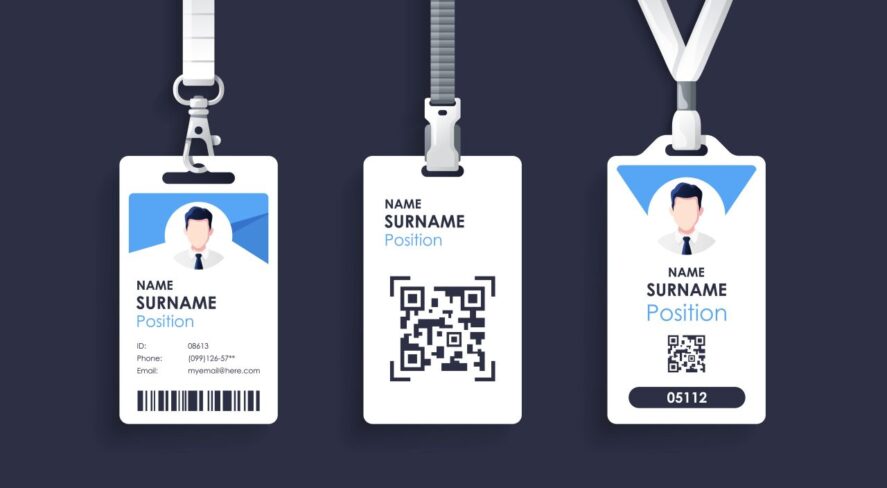
Corporate ID badges have long been treated as a mundane necessity—print them, hand them out and move on. But according to a recent Security Industry Association (SIA) webinar, that mindset may be leaving organizations dangerously exposed.
VIDEO: Designing Secure and Effective Corporate ID Credentials
SIA’s June 4, 2026, webinar offered an in-depth walkthrough of the newly released Corporate Credential Design Guide—a free, vendor-neutral resource built to give security practitioners the framework and justification they need to modernize their credential programs.
Participants heard from Teresa Wu, vice president and head of smart credentials and smart integrate at IDEMIA Public Security and co-chair of SIA’s Credential Design Working Group; James Burke, founder of SynchroCyber and primary author of the guide; and Lindsay Martin-Nez, badge design specialist and vice president of industry engagement at HID. Here are some key takeaways:
The Badge Is Your Physical Trust Anchor—and Your Digital One Too
Wu encouraged a reframing of how organizations think about the role of ID cards.
“When it’s issued properly and managed properly, it can be a very effective tool to enhance corporate security posture,” she said.
Beyond unlocking doors, a well-designed credential can enable access to systems and services, express organizational belonging to employees and—perhaps most critically—serve as a trust anchor not just for physical security, but for digital operations as well.
Wu connected this directly to zero-trust architecture, a concept increasingly central to enterprise security strategy.
“People were surprised that if you have a very good, robust credentialing program and credential management program, it can help you align with zero trust,” she said.
The badge, in other words, isn’t just a card—it’s a potential foundation for your entire identity and access management ecosystem.
The Industry Has a Standards Problem
A core motivation behind the guide was a glaring need for a standardized baseline for corporate badge formats. Identity-proofing practices vary widely from company to company, counterfeiting resistance is rarely a design priority, legacy technology remains prevalent and mobile credential deployment is fragmented across the industry.
Wu was blunt: “After decades of having badges in our organization, millions being issued, some baseline needs to be established.”
The guide is designed to fill that gap—not by prescribing a one-size-fits-all solution, but by providing a practical framework organizations can adapt to their own risk profiles and resources.
“A Beautifully Designed Badge Tied to Weak Identity Proofing Is Security Theater”
Burke delivered one of the session’s sharpest insights when discussing the foundation every credential program must rest on: verified identity.
“A credential is only as strong as the identity proofing that’s behind it,” he said, with a pointed warning about the danger of prioritizing aesthetics over substance.
Before a badge is ever printed, Burke emphasized, the enrollment process must be controlled, auditable and policy-driven—aligned with the organization’s risk factors, access levels and regulatory compliance requirements. This means documented governance over who can approve, produce, activate and revoke credentials—with separation of duties built in.
“A person approving eligibility should not necessarily be the same person producing or activating the badge,” he said.
Renewals and revocations deserve equal attention, said Burke, especially for “outliers” like contractors, temporary workers and employees whose roles change over time.
Credential Topology: Design for the Real World, Not Ideal Conditions
Martin-Nez brought a practitioner’s perspective to the visual design side of credentialing, and her message was refreshingly grounded. Badges need to work in the real world—under imperfect lighting, glanced at in passing, worn on a lanyard at chest height.
“We’re not going through TSA here,” she noted. “These are visual things that we’re wearing around our offices on a daily basis.”
Consistent placement of the photo, name, role and expiration date isn’t just good design—it’s a practical security control.
As Burke said, “Consistent placement reduces cognitive load and helps guards recognize anomalies more quickly.”
Martin-Nez also raised a security concern that many organizations overlook entirely: social media exposure. Every day, employees post photos of their badges on LinkedIn when starting or leaving a job.
“Every time somebody posts a picture of your badge online, this obviously makes it much easier for bad actors to figure out what your badge design looks like, and then potentially recreate it,” said Martin-Nez.
The solution isn’t to suppress employee pride—it’s to build in security features (like holographic laminates) that make counterfeiting difficult regardless of how widely the design is seen.
Materials and Security Features Matter More Than You Think
On the production side, the guide makes a clear recommendation for high-security environments: use reverse transfer printing technology over direct-to-card printing, as it is significantly more resistant to tampering. Laminate is equally important—not only for badge durability, but also for protecting the integrity of the design itself.
“If you just address that concern from the front end and implement a laminate, not only is it going to make your badge more durable, but from a security perspective it’s also going to protect the integrity of that design,” Martin-Nez explained.
Custom holographic laminates take this a step further, adding a layer of security that can’t be replicated with off-the-shelf materials.
Photo Quality and Credential Life Cycle Are Non-Negotiable
Two operational issues came up repeatedly throughout the session: photo quality and life-cycle management. Poor-quality or outdated photos undermine both visual verification and biometric system accuracy. The guide recommends updating credentials at least every four years, with immediate reissuance any time there is a significant change in appearance.
Equally important is ensuring that credentials are actively revoked when employees leave or change roles—using automated life-cycle management—not manual tracking via spreadsheets.
The Guide as Your Internal Advocacy Tool
Throughout the webinar, panelists discussed helping security practitioners make the business case for investing in their credential programs. The guide was deliberately written to provide “talking points, talk tracks and justification” for getting budget and leadership buy-in.
The framing Wu offered is compelling: “Is it really a cost center, or is it a business enablement?”
A well-run credential program can reduce operational costs, accelerate workforce mobility and strengthen the organization’s overall security posture—making it an investment, not merely an expense.
What’s Next
The Credential Design Working Group is already moving toward a version 2 of the guide and is developing formal national consensus standards. Mobile credential best practices will be addressed in the next phase. The working group is open to all practitioners—SIA membership is not required to participate.
The SIA Corporate Credential Design Guide is available for free download here.
In creating this blog, content from the Designing Secure and Effective Corporate ID Credentials webinar was summarized using large language models and reviewed by human editors.
 Back to Top