
Critical Infrastructure

The National Infrastructure Protection Plan, developed by the Department of Homeland Security, recognizes identifies 16 specific sectors of critical infrastructure in American society. The Plan provides guidance for the public and private sectors to work together to ensure their security. SIA participates in the planning for security as the face of the private sector industry.
An Update for SIA Members From the Utilities Advisory Board
What the SIA Utilities Advisory Board Has Been Producing for You The Security Industry Association (SIA) Utilities Advisory Board serves as a leader in compliance and technology topics for security professionals operating within utility facilities. We are dedicated to developing recommendations and guidance for the physical security and cybersecurity of utilities infrastructure. Our work also…
Keep Reading »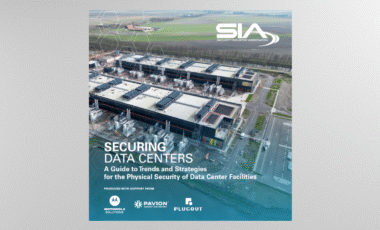
Securing Data Centers: A Guide to Trends and Strategies for the Physical Security of Data Center Facilities
A guide to trends and strategies for the physical security of data center facilities.
Keep Reading »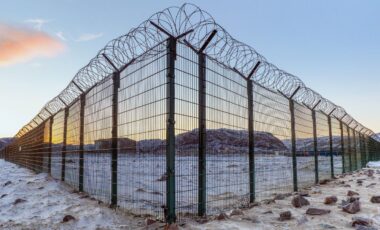
The Fence Perspective: Bringing Construction to Security
My name is Josh Velazquez, and I’m the vice president of the Fence Division at SAGE Integration. At SAGE I lead high-security perimeter projects for critical infrastructure—from data centers to substations, solar farms, and more. With a degree in construction management from Bowling Green State University and over 15 years in the construction industry, I’ve…
Keep Reading »
Three Can’t-Miss Sessions on Critical Infrastructure and Data Protection at ISC West
ISC West 2025 is coming up March 31 – April 4 in Las Vegas, Nevada, and the Security Industry Association (SIA) and ISC West have revealed full conference details for the SIA Education at ISC West program, including keynote presentations from top luminaries and over 115 sessions from top industry expert speakers on the most…
Keep Reading »
Following Recent Incidents, U.S. House of Representatives Examines Counterdrone Protections
Top security industry takeaways from House Homeland Security Committee Hearing “Safeguarding the Homeland From Unmanned Aerial Systems” On Dec. 10, 2024, the House Homeland Security Committee held a joint hearing by the Subcommittee on Counterterrorism, Law Enforcement, and Intelligence and Subcommittee on Transportation and Maritime Security entitled “Safeguarding the Homeland from Unmanned Aerial Systems.” The…
Keep Reading »
Security Industry Association Opens Call for Speakers for 2025 SIA GovSummit Conference
Speaking proposals are being accepted for SIA’s public policy and government security conference, taking place May 20-21 in Washington, D.C. SILVER SPRING, Md. – The Security Industry Association (SIA) is seeking proposals from subject matter experts for the 2025 SIA GovSummit – SIA’s annual public policy and government security technology conference. SIA GovSummit 2025 will be held…
Keep Reading »
Guide to NERC CIP Compliance
This detailed report and guidance, the equivalent of a 150-page e-book, is the authoritative guide to complying with physical security and cybersecurity requirements of NERC CIP rules.
Keep Reading »
The Future of Utilities Security
As attacks increase, artificial intelligence-powered proactive solutions can help to keep the lights on The recent surge in security incidents at electrical substations and utilities in the United States is alarming. Attacks have increased 71 percent over the past year and experts foresee this unfortunate trend continuing into 2025 and beyond. These events are not…
Keep Reading »
Security and Infrastructure Grants Guide
A tool to help companies navigate the complicated grants processes of federal and state government and effectively find and secure grants.
Keep Reading »
Highlights From the 2024 National Defense Authorization Act (NDAA) and What It Means for the Security Industry
On Dec. 22, 2023, President Biden signed into law the National Defense Authorization Act (NDAA) for fiscal year 2024. Approved annually, the NDAA primarily authorizes appropriations and sets policy requirements for the U.S. Department of Defense (DOD), while also addressing U.S. Department of Energy national security programs, U.S. Department of State activities, the intelligence community…
Keep Reading » Back to Top