
Video Surveillance

The most rapidly growing sector of the security industry is undoubtedly video surveillance, which has seen fast adoption with a boost in video quality and a drop in system prices. Video surveillance systems empower security personnel to see across vast enterprises, but they also provide other benefits such as demonstrating patterns in customer behavior.

SIA Statement on Recent Anti-ALPR Demonstrations
In any free society, citizens should embrace their right to responsibly express their views about public policies that impact their lives and communities. Respectful debate about policies such as those governing the use of license plate recognition is part of the fabric of any democracy and vital to ensuring thoughtful laws are adopted. However, legitimate debate…
Keep Reading »
From Loss Prevention to Retail Visibility
How RFID, EAS and video analytics are reshaping store security Retail loss prevention has always been measured by what it could stop. Did the alarm sound? Was the merchandise protected? Was the incident captured on video? Those questions still matter. Retailers continue to face theft, organized retail crime, internal loss, operational errors and pressure to…
Keep Reading »
Video Streaming Protocols and Delivery Methods for Physical Security
A reference guide for network video systems, produced by the Security Industry Association’s Video and Vision Subcommittee.
Keep Reading »
From Analytics to Intelligence
GenAI is adding context and reasoning to video security Every security alert tells a story, but some tales only go as deep as the introduction. Today, many security tools fail to deliver the context needed to empower teams to quickly understand the full story, slowing decision-making and response. When security operators are faced with multiple…
Keep Reading »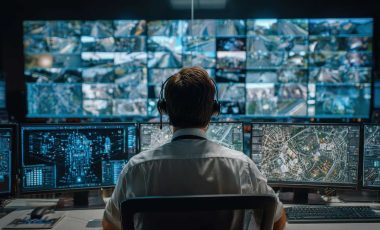
Advancing Beyond Video Surveillance
Proactive visual security is transforming monitoring centers For decades, video surveillance has been one of the cornerstones of electronic security. Yet, despite advances in camera technology, many systems continue to operate in much the same way they did years ago: recording events for later review rather than helping prevent incidents in real time. Today, that…
Keep Reading »
Security Industry Association Calls for the Responsible and Effective Use of Automated License Plate Reader Technology
SIA has issued policy principles and guidance designed to guard against misuse of ALPR while preserving public safety benefits. SILVER SPRING, Md.—The Security Industry Association (SIA) has issued a call for the responsible and effective use of automated license plate reader (ALPR) technology and released policy principles designed to guide the development of administrative and legislative actions…
Keep Reading »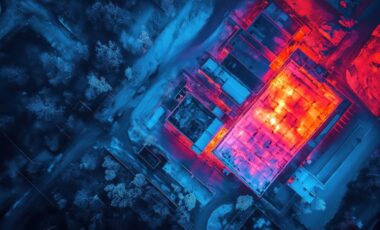
Thermal Imaging: Protecting Utility Assets Before Problems Escalate
Thermal imaging is becoming an essential tool for electric utilities because it supports physical security, asset protection and early detection. From a security perspective, thermal cameras can detect people and vehicles in darkness, fog, smoke and other challenging conditions where conventional cameras may struggle. This allows security teams to identify perimeter intrusions and suspicious activity at substations, generation facilities and remote infrastructure. The…
Keep Reading »
The Video Architecture of the Future
Edge-to-cloud systems leverage the strengths of both components For decades, video surveillance followed a familiar blueprint: cameras at the edge, recorders tucked into network closets and servers humming away in back rooms. It worked well for a time, but it was built for an era when cameras were passive sensors and infrastructure evolved slowly. That…
Keep Reading »
Ensuring That Seeing Is Believing
Built-in authentication is needed to differentiate real video from AI A video goes viral. A screenshot sparks conversation. An audio file causes rumors to spread. A single frame steers everything from a boardroom decision to a jury’s vote. The world now runs on digital media, but there’s a risk—the internet now manufactures “proof” on demand.…
Keep Reading »
The Risk of AI Shadow Data
Storing video data used to simply involve storing the video from the camera and another basic event database of motion events or other basic yes/no triggers. With all of the metadata created by some cameras now, however, it is also necessary to store this additional data somewhere. System designers need to take this data into…
Keep Reading » Back to Top