
Archive for May 2026
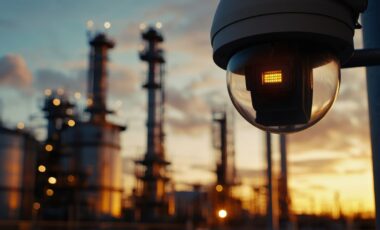
Continuous Monitoring Is Necessary. Continuous Exposure Is Not.
Across critical infrastructure, continuous monitoring has increasingly been implemented through polling, persistent connectivity and continuously exposed devices. As operational environments scale to tens of millions of connected endpoints, that communication burden increasingly drives exposure, latency, operational fragility and escalating operational expenses. The more frequent the polling, ping or heartbeat interval, the more operationally critical the…
Keep Reading »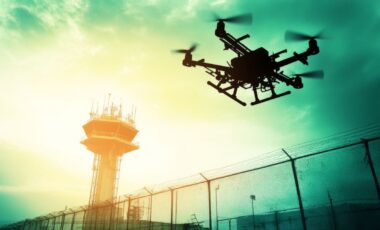
3D Grid Security: Actions Available Now and Upcoming FAA Protections
Traditional fences stop at the property line—drones fly right over them. While airspace is federal territory, local law enforcement governs the ground—giving you immediate power to interdict pilots using state or local statutes. What You Can Do Now While utilities generally cannot prohibit lawful drone transit through regulated airspace, drone pilots may still be subject…
Keep Reading »
Mitigating the Silo Vulnerability
The GRC framework brings physical security and cybersecurity together Governance, risk and compliance (GRC) provide an integrated framework for managing security programs across both physical and cyber domains. This high-level approach ensures that security investments align strategically with business objectives, risks are systematically identified and mitigated and regulatory requirements are consistently met across an organization.…
Keep Reading »
Creating Your Modern Physical Security Stack
The connected universe of physical security is giving utility and critical infrastructure operators a real edge. Real-time intelligence. Preventative early detection. True workflow sync between technology and the people securing the facility. Layered security has been around for some time. But it never worked this seamlessly—or this far ahead of the threat. The Stack That’s…
Keep Reading »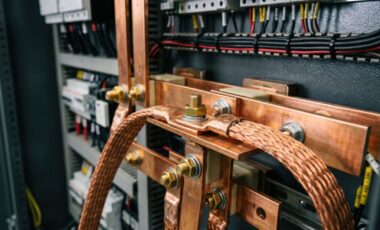
Protected: Helping Utilities Stop Copper Theft Before It Happens With AI‑Enabled Security Solutions
Copper theft is one of the most disruptive and costly security challenges for utilities and oil and gas operators. It’s estimated that U.S. utilities lose nearly $920 million annually due to copper theft, according to The Insurance Information Institute. Across Europe, Asia Pacific, the Middle East and Latin America, many countries cite oil siphoning and copper stealing as the most common theft…
Keep Reading »
Convergence Is No Longer Optional: Futureproofing Utility Security
Utilities are rapidly realizing that IT, operational technology (OT) and physical security convergence is no longer a “nice to have”—it is essential to futureproof security and mitigate complex cyber/physical attacks and insider threats across critical infrastructure environments. As digital transformation accelerates and operational systems become increasingly interconnected, siloed security models are creating unacceptable risks to…
Keep Reading »
Why the SIA Utilities Advisory Board Matters
The Security Industry Association (SIA) Utilities Advisory Board serves as a strategic leadership group dedicated to strengthening security and resilience across the utilities sector. As utilities face an increasingly complex threat landscape, including cyberattacks, physical security risks, supply chain vulnerabilities and geopolitical threats, the advisory board provides a collaborative environment where experts from across utilities…
Keep Reading »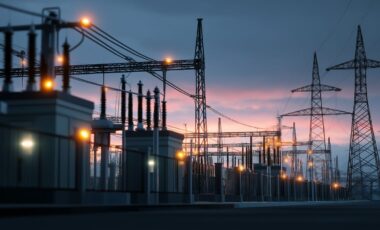
Insider Threat Guidelines for Energy-Sector Critical Infrastructure
Insider threats—originating from employees, contractors or partners with legitimate access—pose a uniquely complex risk because they combine human behavior with access to sensitive systems and processes. Mitigating these threats requires a coordinated, cross-functional approach spanning human resources, cybersecurity, physical security and organizational leadership. There are three primary insider threat personas: negligent, malicious and compromised. Negligent insiders…
Keep Reading »
Federal Privacy and AI Bills Are Gaining Traction
Two recently introduced House bills would set national rules on data privacy and artificial intelligence. States, meanwhile, keep adding new requirements of their own. U.S. House of Representatives lawmakers introduced two significant bills last month. On April 22, 2026, Rep. John Joyce (R-Pa.)—chair of the House Energy and Commerce Subcommittee on Oversight and Investigations and…
Keep Reading »
Stop Automating the Wrong Work
Physical security does not have an artificial intelligence (AI) problem—it has a workflow problem. For the last 20 to 40 years, this industry has mostly iterated. We added better cameras, better access control panels, better sensors, better dashboards, better reports and more integrations. We rarely asked the harder question: Why does this process exist in the…
Keep Reading » Back to Top